Introduction
The American industrial landscape, spanning from agriculture and leather tanning to pharmaceuticals and energy, relies heavily on a consistent supply of high-quality specialty chemicals. Among these, formic acid stands out as a versatile workhorse. As a simple carboxylic acid, it serves as a preservative, antibacterial agent, acidifier, and a key component in chemical synthesis. For procurement managers and business owners across the United States, sourcing this critical chemical is a strategic decision that impacts product quality, operational efficiency, and the bottom line.
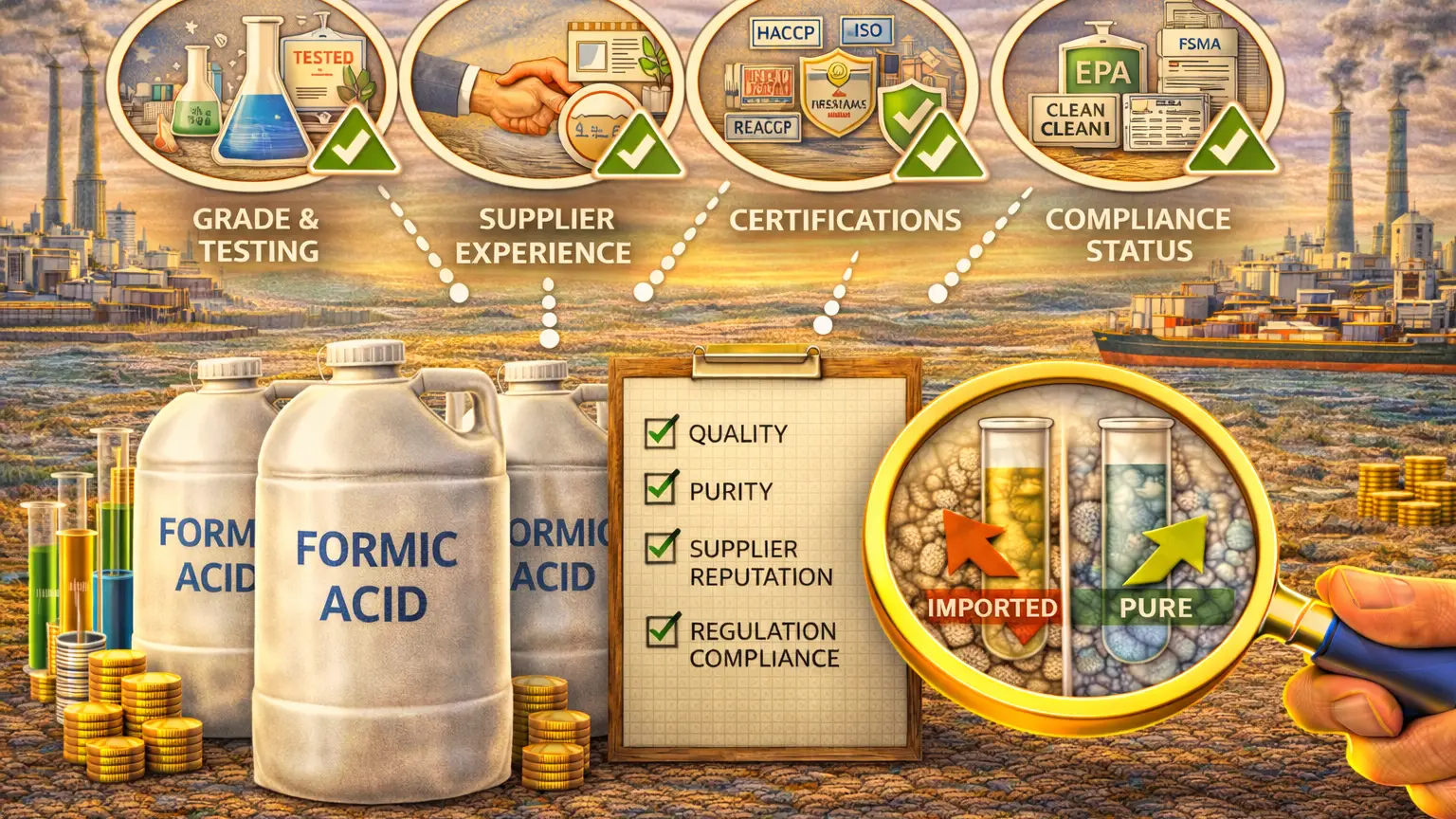
However, the sourcing process is fraught with considerations that extend far beyond a simple price quote. In today's competitive and regulated market, American buyers have developed a sophisticated checklist. They look beyond the basic product listing to evaluate factors that ensure security of supply, compliance, and value. This article delves into the precise criteria that informed buyers prioritize first when sourcing formic acid, providing a roadmap for both new and experienced purchasers to make confident, risk-mitigated decisions.
Understanding these priorities is crucial for connecting with reliable partners in the global chemical market, including established international suppliers like Chemtradeasia.com, which cater to the specific needs of the American industrial sector. The initial checks form the foundation of a successful and sustainable supplier relationship.
Purity and Technical Specifications: The Non-Negotiables
The very first filter any serious buyer applies is the technical data sheet. The purity grade of formic acid directly dictates its suitability for an end application. The most common commercial grades are Formic Acid 85% and Formic Acid 90%, with the concentration impacting both performance and handling. For instance, higher concentrations may be required in certain esterification processes or as a reducing agent, while lower concentrations might be preferred for animal feed preservation due to handling safety.
Buyers meticulously examine parameters beyond concentration. The presence of impurities like chlorides, sulfates, or iron can be catastrophic in sensitive applications such as pharmaceutical intermediates or electronics cleaning. Color (APHA scale) is another quick visual indicator of quality; a clear, colorless liquid is typically expected. Density and freezing point are also verified against standard values to ensure the product has not been adulterated or degraded. This rigorous scrutiny of specs is non-negotiable, as off-spec material can lead to production downtime, defective final products, and significant financial loss.
Furthermore, buyers align the technical specifications with their process requirements. A leather tannery will have different purity tolerance levels compared to a manufacturer of rubber chemicals. The initial request for a detailed Certificate of Analysis (CoA) for a sample or previous batch is a standard and critical first step. This document, often provided by reputable suppliers, is the objective proof of quality that buyers check before any commercial discussion progresses.
Supplier Credibility and Proven Track Record
Once the technical specs align, the buyer's focus shifts to the entity behind the product. In an industry where consistency is king, supplier credibility is paramount. American buyers invest significant time in vetting a supplier's history, financial stability, and market reputation. They look for evidence of a proven track record in supplying formic acid to the U.S. market, which involves navigating complex customs and logistics channels.
Key checks include business longevity, client testimonials or case studies, and membership in recognized industry associations. Buyers often verify if the supplier holds relevant quality management certifications (like ISO 9001), which indicate a systematic approach to quality control. The ability to provide comprehensive product documentation, including Safety Data Sheets (SDS) compliant with U.S. OSHA Hazard Communication Standard (HCS), is a fundamental credibility test.
For international suppliers, such as Chemtradeasia.com, demonstrating a history of successful exports to America is a major advantage. Buyers look for suppliers who understand Incoterms, U.S. import regulations, and have established relationships with freight forwarders and port agents. A supplier's responsiveness, transparency in communication, and technical support capability during this evaluation phase are strong indicators of a reliable long-term partnership, often outweighing a marginally lower price from an unproven source.
Logistics, Safety, and Regulatory Compliance
The journey of formic acid from the manufacturer's tank to the buyer's facility is a critical phase that buyers scrutinize closely. Given that formic acid is a corrosive substance (UN 1779), its packaging, labeling, and transportation must adhere to strict international and domestic regulations. Buyers first check the proposed packaging—typically HDPE drums, IBC totes, or isotanks for bulk shipments—for suitability and compliance with U.S. Department of Transportation (DOT) standards.
Logistics expertise is a major differentiator. Buyers evaluate the supplier's proposed shipping route, estimated transit times, and their partnership with reliable logistics providers. They assess the supplier's knowledge of key U.S. ports of entry and inland transportation networks. A critical component is the completeness and accuracy of the shipping documentation, including the SDS, commercial invoice, packing list, and bill of lading, all essential for smooth customs clearance.
Compliance with U.S. regulatory bodies like the Environmental Protection Agency (EPA) and the Occupational Safety and Health Administration (OSHA) is imperative. Buyers verify that the supplied formic acid and its documentation meet all Toxic Substances Control Act (TSCA) requirements. Any lapse here can result in cargo being held at port, incurring demurrage charges, or even refused entry, making this a top-tier priority for risk-averse American purchasers.
The Role of Price and Total Cost of Ownership
While often the most visible metric, price is rarely the very first check for seasoned buyers; it is evaluated within the context of Total Cost of Ownership (TCO). The initial quoted price per ton or kilo is just the starting point. Astute buyers immediately factor in additional costs: international freight, insurance, customs duties, port handling fees, and inland transportation to their plant. A low FOB price from an overseas supplier can be negated by high logistics costs or unexpected delays.
Buyers also consider cost factors related to quality and reliability. A slightly higher price from a supplier with a flawless record of delivering on-spec material consistently can be far cheaper than the hidden costs of production delays, wasted raw materials, or quality rejects caused by an inferior product. Payment terms offered by the supplier, which affect cash flow, are also a key part of the financial evaluation.
Therefore, the initial price check is really an assessment of value and predictability. Buyers look for transparent, breakdown pricing that allows for accurate TCO calculation. They favor suppliers who offer stable pricing or clear explanations for market volatility, rather than those with suspiciously low bids that may signal compromised quality or hidden charges later in the supply chain.
Applications and Product-Specific Considerations
The intended application profoundly shapes the sourcing criteria from the outset. Buyers do not source a generic "formic acid"; they source a chemical tailored for a specific industrial process. This dictates their priority checks. For example, in animal feed and silage preservation, buyers prioritize consistent concentration (typically 85%) and purity to ensure effective antibacterial action without harming livestock. They may also check for approvals from relevant agricultural authorities.
In the leather tanning and textile industry, where formic acid is used for pH adjustment and dyeing, buyers focus on low metal ion content (especially iron and chromium) to prevent discoloration or defects in the final leather or fabric. For rubber production, where it acts as a coagulant for latex, consistency in strength and rapid delivery schedules to maintain just-in-time production are critical checks.
This application-driven mindset leads buyers to seek suppliers who offer more than just a commodity. They value suppliers who understand these niche requirements and can provide technical data or guidance specific to the application. A supplier that can offer both Formic Acid 85% for preservation and Formic Acid 90% for more demanding chemical synthesis, with clear documentation on the differences, demonstrates an expertise that buyers actively look for. This product-specific knowledge is a decisive factor, turning a simple transaction into a technical partnership.
Conclusion
Sourcing formic acid for the American market is a multifaceted process where due diligence is paramount. As we have explored, informed buyers follow a logical and risk-averse sequence: they first validate the intrinsic quality through technical specifications, then vet the supplier's credibility and ability to execute, followed by a deep dive into the logistics and regulatory framework. Price is analyzed through the lens of Total Cost of Ownership, and all these factors are viewed through the prism of the chemical's specific end-use application.
This structured approach ensures supply chain resilience, product quality, and operational continuity. For suppliers aiming to serve this demanding market, the lesson is clear: success hinges on transparency, consistency, and a deep understanding of both the product and the complex journey it must take to reach U.S. shores. By aligning with these buyer priorities—focusing on certified quality, proven reliability, and application-specific support—suppliers like Chemtradeasia.com can build lasting partnerships with American industry, providing the essential formic acid that drives a wide range of manufacturing sectors forward.
Leave a Comment