Introduction
The global leather industry is undergoing a profound transformation, driven by consumer demand for sustainability, stringent environmental regulations, and a renaissance in appreciation for traditional, high-quality craftsmanship. Nowhere is this shift more pronounced than in Asia, the world's leather manufacturing powerhouse. At the heart of this change lies a renewed and booming interest in vegetable tanning, a centuries-old process being revitalized with modern precision. This resurgence is directly fueling a significant surge in demand for key natural tanning agents, primarily Mimosa Extract and Quebracho Extract, alongside essential auxiliary chemicals like Formic Acid.
This article provides a comprehensive analysis of this market trend within the Asian context. We will explore the economic and environmental drivers, delve into the specific properties and benefits of these critical inputs, and examine their applications in contemporary leather production. For tanneries, chemical suppliers, and brands across Asia, understanding this "vegetable tanning boom" is essential for strategic sourcing, product development, and maintaining a competitive edge in an increasingly eco-conscious market.
The Asia-Pacific Leather Industry's Sustainable Pivot
Asia dominates global leather production, with countries like China, India, Vietnam, Bangladesh, and Indonesia leading in output. Historically, this scale has relied heavily on chrome tanning for its speed and consistency. However, a powerful confluence of factors is pushing the industry toward more sustainable practices. International brands, particularly in Europe and North America, are setting ambitious sustainability targets for their supply chains, mandating reduced chemical footprints and traceable, eco-friendly materials. Furthermore, domestic environmental policies in major producing nations are tightening, regulating effluent discharge and encouraging cleaner production technologies.
This pivot is not merely regulatory compliance; it is a strategic business move. The market for "green" leather goods is expanding rapidly, with consumers willing to pay a premium for products with a transparent and responsible origin. Vegetable-tanned leather, with its natural origins and biodegradable characteristics, perfectly aligns with this value proposition. Consequently, Asian tanneries are investing in R&D and retrofitting processes to incorporate vegetable tanning methods, either as a full replacement for chrome or in hybrid systems, creating unprecedented demand for the raw materials that make it possible.
Core Drivers of the Vegetable Tanning Boom
The shift towards vegetable tanning is propelled by several interconnected drivers. First and foremost is the environmental imperative. Unlike chrome tanning, which raises concerns about hexavalent chromium in wastewater, vegetable tanning uses renewable plant-based tannins. The effluent is more biodegradable, simplifying wastewater treatment and reducing the environmental liability for tanneries. This is a critical advantage as industrial zones face stricter scrutiny.
Secondly, there is a strong market-driven demand for quality and aesthetics. Vegetable-tanned leather is renowned for its unique characteristics: a rich, natural patina that develops over time, a distinctive earthy aroma, and a firm, luxurious temper. It is the material of choice for high-end saddlery, luxury bags, footwear, and artisanal goods. As Asian manufacturers move up the value chain, producing premium goods for both export and a growing affluent domestic market, mastering vegetable tanning becomes a key differentiator. The third driver is supply chain security and traceability. Plant-based tannins offer a transparent, naturally derived supply chain, which is increasingly valuable for brand storytelling and meeting certification standards.
Spotlight on Key Tanning Agents: Mimosa, Quebracho & Formic Acid
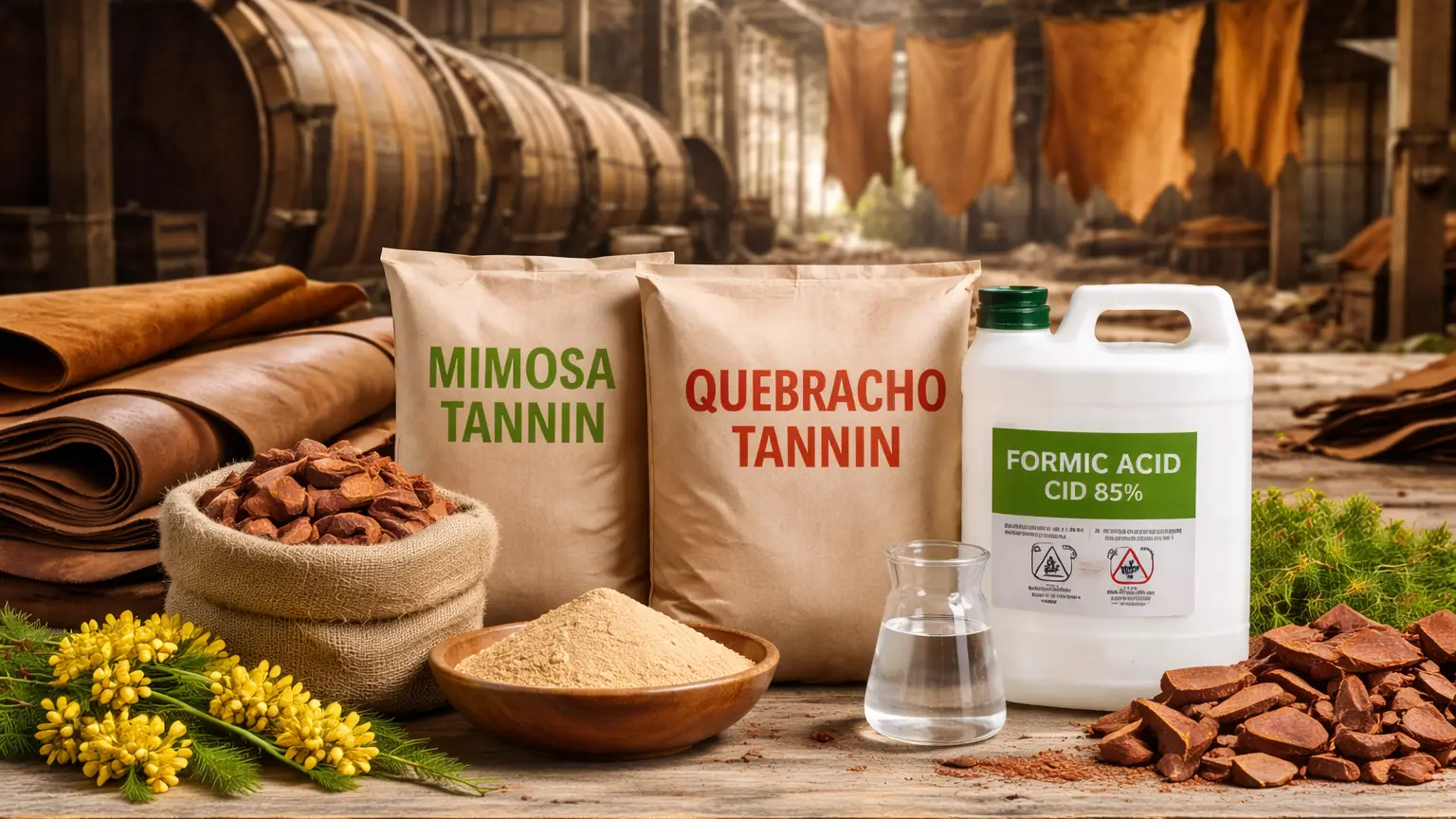
Understanding the specific agents fueling this boom is crucial. Mimosa Extract, derived from the bark of the Acacia mearnsii tree (primarily grown in South Africa and South America), is a cornerstone of modern vegetable tanning. It is typically available as a spray-dried powder with a high tannin content (often 60-70%). Mimosa tannins are known for their light color, which produces leathers in pale cream to light brown shades, excellent lightfastness, and good penetration. It imparts a soft, supple feel and is often used for full-grain leathers where the natural grain is showcased.
Quebracho Extract, sourced from the heartwood of the Schinopsis tree in South America, is another vital player. It is rich in condensed tannins and known for its rapid tanning action and high tannin yield. Quebracho produces leather with a characteristic reddish-brown hue, excellent firmness, and high density. It is particularly valued for sole leather, belting, and other applications requiring structural integrity. Often, Mimosa and Quebracho are blended to balance color, softness, and filling properties. Meanwhile, Formic Acid, while not a tannin itself, is an indispensable workhorse in the tannery. It is used extensively in the pickling stage to lower the pH of hides, preparing them for optimal tannin uptake. Its precise control is essential for consistent quality in both vegetable and chrome tanning processes.
Applications and Technical Advantages in Modern Tanneries
The application of these materials has evolved far beyond traditional pit tanning. Modern tanneries employ drum tanning techniques where precise quantities of Mimosa Extract or Quebracho Extract powders are added to drums containing hides and water. The process is controlled for time, temperature, and mechanical action to ensure even penetration. A major technical advantage of these extracts is their compatibility in combination tanning systems. A common practice is to use a vegetable tannin base (e.g., Quebracho for firmness) followed by a lighter retan with Mimosa or even synthetic tannins and a final chrome touch-up. This hybrid approach allows tanners to achieve specific properties—like the fullness and patina of vegetable tanning with the hydrothermal stability of chrome—optimizing performance and cost.
Formic Acid plays a critical role in this precise chemistry. Its strong yet volatile nature makes it ideal for achieving the low pH (2.8-3.2) required for effective pickling without over-acidifying the hide. Proper use of formic acid ensures that the collagen fibers are opened correctly, allowing the larger vegetable tannin molecules to bind effectively, resulting in well-tanned, stable leather. The technical advantage lies in the control it offers, leading to reduced processing time, more consistent batch-to-batch results, and optimal utilization of the more expensive vegetable tannins.
Sourcing and Quality Considerations for Asian Tanners
For Asian tanneries, consistent and reliable sourcing of high-quality vegetable tanning extracts and auxiliary chemicals is paramount. Key considerations include tannin content and purity. Higher tannin content extracts are more efficient, requiring less product to achieve the desired tannage. Impurities or inconsistent blends can lead to uneven color, spotting, or weak leather. Reputable suppliers provide detailed technical data sheets specifying tannin content, non-tannins, insolubles, and pH. The physical form (powder vs. liquid) also impacts handling, dissolution rate, and storage.
Given the geographic origin of raw materials (South America for Quebracho, Africa for Mimosa), supply chain logistics, certification (such as FSC for sustainable forestry), and price volatility are significant factors. This is where established regional suppliers and platforms become vital. Partners like chemtradeasia.com and its regional portals (e.g., chemtradeasia.in for India, chemtradeasia.co.id for Indonesia) provide crucial market access, ensuring a steady supply of genuine Mimosa Extract, Quebracho Extract, and high-purity Formic Acid to tanneries across the continent. They bridge the gap between global producers and local manufacturers, offering technical support and ensuring that quality standards are met consistently.
Conclusion
The vegetable tanning boom in Asia is more than a fleeting trend; it is a structural shift towards a more sustainable and quality-oriented future for the leather industry. The rising demand for Mimosa Extract, Quebracho Extract, and Formic Acid is a direct indicator of this transformation. These materials enable tanneries to meet evolving environmental standards, cater to premium market segments, and develop unique, desirable leather products. Success in this new landscape requires not only process adaptation but also strategic partnerships with knowledgeable and reliable chemical suppliers who understand the specific needs of the Asian market.
Disclaimer: The information contained in this article is for general informational and market insight purposes only. It is not intended as technical, safety, or professional advice for specific tanning applications. Chemical handling and leather processing involve significant risks. Readers are strongly advised to independently verify all information, consult official technical documentation such as Material Safety Data Sheets (MSDS/SDS), and engage with qualified technical experts. For specific application guidance, product specifications, or safety protocols, please contact our technical team directly.
Leave a Comment