Introduction
The global leather industry stands at a critical juncture, balancing centuries-old craftsmanship with the urgent demands of environmental stewardship and ethical production. Nowhere is this tension more palpable than in Asia, the undisputed epicenter of leather manufacturing and chemical processing. As we look towards 2026, the concept of a "green supply chain" has evolved from a niche differentiator to a non-negotiable pillar of commercial viability and brand trust. At the heart of this transformation are the core chemical agents of tanning: tannins and formic acid. Their sourcing, application, and integration into production workflows are being redefined by sustainability metrics, traceability demands, and innovative chemistry.
This article provides a comprehensive analysis of how these fundamental chemicals are shaping the future of Asia's leather sector. We will delve beyond surface-level trends to explore the market dynamics, technological advancements, and supply chain strategies that will dominate the landscape in 2026. For industry stakeholders—from tanneries and chemical distributors to fashion brands and sustainability officers—understanding the evolving role of formic acid and advanced tannins is essential for securing a competitive, compliant, and conscientious position in the market.
The Asian Leather Industry's Sustainability Imperative
Asia accounts for over 60% of the world's leather production, with powerhouses like China, India, Vietnam, and Bangladesh driving volume. However, this dominance comes with intense scrutiny. International brands, backed by consumer activism and stringent regulations like the EU's Green Deal and ZDHC (Zero Discharge of Hazardous Chemicals) framework, are mandating radical transparency and environmental compliance from their suppliers. The traditional image of tanning as a pollutive, resource-intensive process is no longer tenable. The industry's social license to operate now depends on demonstrable reductions in water usage, chemical effluent, carbon footprint, and waste generation.
The push for sustainability is also an economic imperative. Tanneries that fail to adapt face exclusion from lucrative global supply chains, potential fines, and reputational damage. Conversely, early adopters of green chemistry and circular economy principles are gaining preferential access to contracts and premium pricing. The year 2026 is projected as a tipping point, where investments in cleaner technologies and sustainable chemical inputs, such as responsibly sourced vegetable tannins and efficiently used formic acid, will transition from cost centers to core value drivers. This shift is creating a booming market for specialized chemical suppliers who can guarantee not just product quality, but also verifiable environmental and ethical credentials.
The Science of Green Tanning: Tannins and Formic Acid
Tanning is the process that converts perishable animal hides into durable leather. The two primary agents, tannins and formic acid, play distinct yet complementary roles in both conventional and green methodologies. Tannins, polyphenolic compounds, bind to collagen fibers in the hide, stabilizing them against heat, moisture, and microbial decay. The "green" shift here involves a move from chromium-based (chrome tanning) to vegetable tannins derived from bark, wood, and fruits (e.g., quebracho, chestnut, tara), which are biodegradable and renewable. However, innovation continues with modified tannins and synthetic organic tannins that offer faster penetration and more consistent results while maintaining an eco-friendly profile.
Formic acid (HCOOH), a simple carboxylic acid, is a workhorse of the beamhouse and tanning yard. Its primary function is as a pH regulator and deliming agent. It effectively lowers the pH of hides after liming, creating the ideal acidic environment for the uptake of tanning agents, especially chrome and synthetic tannins. In green tanning protocols, precise control with formic acid is crucial to minimize chemical usage overall and ensure optimal fixation, thereby reducing effluent load. Furthermore, its role in pickle tanning processes helps preserve hides with less environmental impact compared to alternatives. The efficiency and relatively lower toxicity profile of formic acid make it a preferred choice in modern, optimized tanneries aiming for reduced total dissolved solids (TDS) in wastewater.
Spotlight on Key Products: Specifications and Sourcing
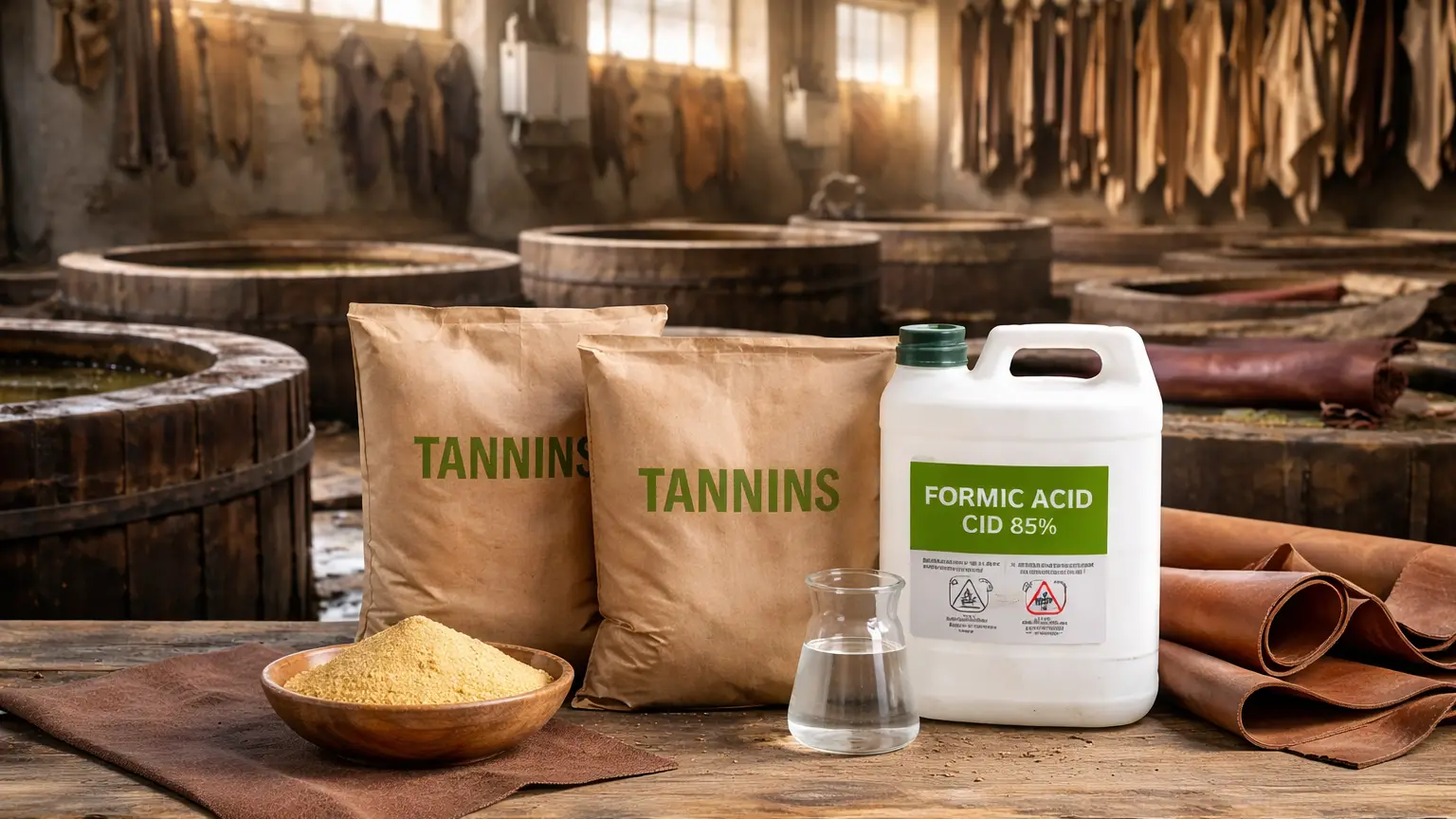
Navigating the chemical market requires a clear understanding of product specifications and reliable sourcing channels. For tanneries across Asia, partnering with a dedicated supplier like ChemtradeAsia—with its regional portals such as chemtradeasia.com, chemtradeasia.in, and chemtradeasia.co.id—provides access to a consistent stream of high-quality chemicals. A specialized platform like leatherchemicalsasia.com further focuses on the nuanced needs of the tanning industry, offering tailored solutions and technical support.
Formic Acid for leather processing is typically available in concentrations of 85% and 90%. Key specifications include purity (often >85%), clarity, and low heavy metal content to prevent contamination. Sourcing high-grade formic acid is critical; impurities can lead to uneven tanning, poor dye uptake, and weaker leather. For sustainable operations, the production method of the acid itself is coming under scrutiny, with a growing interest in bio-based formic acid produced from renewable feedstocks. Meanwhile, modern tannins are categorized beyond just vegetable or synthetic. Specifications now include parameters like degree of sulfonation (affecting penetration speed), pH stability, and low sugar content (to prevent mucilage formation). Blended tannin systems, which combine the best properties of different types, are becoming popular for achieving specific leather characteristics like fullness, softness, or lightfastness with minimal environmental impact.
The value of a specialized supplier lies in providing not just the chemical, but also the accompanying data: Material Safety Data Sheets (MSDS/SDS), technical data sheets (TDS), and traceability documentation proving sustainable origin for vegetable tannins. This comprehensive approach ensures tanneries can meet both production quality standards and the rigorous audit requirements of global brands.
Applications in Modern Leather Processing
The practical application of formic acid and tannins defines the quality and sustainability of the final leather. In the beamhouse, formic acid is meticulously used in deliming. Its weak acid nature allows for a gentle yet effective neutralization of alkali, preventing surface acidification ("burning") of the hide and enabling a more uniform subsequent tanning process. This precision application reduces the need for washing cycles, conserving water. In the tanning drum, formic acid is indispensable for pH adjustment during chrome tanning, ensuring over 95% chrome uptake, which drastically reduces chromium in wastewater—a key environmental and regulatory target.
Tannins find application across multiple stages. Vegetable tannins are primarily used in pit or drum tanning for heavy leathers like those used in footwear soles and equestrian equipment. Their natural origin offers a unique, rich patina. Synthetic and modified tannins are used in re-tanning to improve leather properties: phenolic syntans offer lightfastness and uniformity, acrylic syntans enhance softness and grain tightness, and resin tannins improve fullness. The most advanced applications involve pre-tanning with aldehydic or synthetic agents followed by vegetable re-tanning, creating leathers that are both eco-friendly and possess high technical performance, suitable for automotive upholstery or premium accessories.
Building a Resilient and Transparent Supply Chain
By 2026, the leather chemical supply chain in Asia will be characterized by digitalization and radical transparency. The journey of a drum of formic acid or a batch of tannins from manufacturer to tannery will be digitally tracked. Blockchain-like technologies may be employed to provide immutable records of origin, handling, and carbon footprint. This traceability is vital for brands to validate their sustainability claims and for tanneries to manage risks related to regulatory compliance and raw material volatility.
Regional hubs will become increasingly important. A supplier with a network like ChemtradeAsia, evidenced by domains such as chemtradeasia.ae for the Middle East gateway and chemtradeasia.sg for Southeast Asia, is better positioned to ensure supply continuity. This mitigates risks from logistics disruptions, geopolitical tensions, or local shortages. Furthermore, a resilient supply chain is not just about logistics; it's about partnership. Suppliers will need to act as technical consultants, helping tanneries optimize chemical dosages, implement water recycling systems, and treat effluent—turning chemical procurement into a strategic collaboration for efficiency and sustainability.
Conclusion
The path to a secure and green leather supply chain in Asia by 2026 is intrinsically linked to the intelligent adoption and management of core tanning chemicals. Formic acid, with its critical role in pH management and process efficiency, and tannins, in their evolving natural and synthetic forms, are more than mere inputs; they are levers for environmental performance, product quality, and market access. The tanneries and chemical suppliers that embrace this holistic view—prioritizing high-specification products, transparent sourcing, and application expertise—will lead the industry's transformation.
Success will belong to those who integrate these chemicals into a broader framework of clean technology, digital traceability, and circular economy principles. The future of Asian leather is not just about preserving an ancient craft, but about reinventing it for the modern conscience, with formic acid and advanced tannins serving as foundational pillars of this new, sustainable era.
The information presented in this article is for informational and market insight purposes only. It is not intended as technical, safety, or professional advice. Specifications, applications, and regulations are subject to change. Readers are strongly advised to verify all information independently with qualified experts, consult official product documentation and safety data sheets (SDS/MSDS), and contact our technical team for guidance on specific applications and requirements.
Leave a Comment