Introduction
The global leather industry stands at a pivotal crossroads, driven by an insatiable demand for quality and an urgent call for sustainability. In Asia, the world's leather manufacturing powerhouse, this duality is particularly pronounced. As environmental regulations tighten and consumer preferences shift towards eco-conscious products, traditional chrome tanning is being complemented and, in many cases, replaced by more natural alternatives. At the forefront of this green revolution is Quebracho Extract, a potent vegetable tanning agent derived from the heartwood of South American Quebracho trees. This article provides a comprehensive analysis of the market, applications, and future of Quebracho Extract in Asia's leather tanning industry, projecting towards the landscape of 2026.
For tanneries and leather goods manufacturers across India, Vietnam, China, Indonesia, and Bangladesh, adopting sustainable practices is no longer a niche preference but a strategic imperative. Quebracho Extract offers a proven, natural pathway to achieve this, producing leathers renowned for their warmth, fullness, and unique aesthetic. Understanding this product's role is crucial for industry stakeholders aiming to future-proof their operations and capture value in a competitive market. Suppliers like Chemtradeasia, with its regional portals such as chemtradeasia.in and chemtradeasia.co.id, are pivotal in bridging the gap between sustainable raw materials and Asia's industrial-scale tanneries.
The Resurgence of Vegetable Tanning in Asia
The Asian leather sector's shift towards vegetable tanning is underpinned by a powerful confluence of market forces. Firstly, stringent environmental policies in key producing countries are imposing heavy restrictions on effluent discharge, particularly concerning chromium. Vegetable tanning, with its biodegradable and less toxic waste profile, presents a compelling solution. Secondly, international brands and OEMs sourcing from Asia are increasingly mandating sustainable and traceable supply chains, often offering premium pricing for vegetable-tanned leather in categories like luxury goods, automotive interiors, and high-end footwear. This creates direct economic incentives for tanneries to invest in the necessary expertise and materials.
Furthermore, the "craft" and "heritage" narrative associated with vegetable tanning resonates strongly with modern consumers, both in the West and in Asia's growing affluent domestic markets. Leathers tanned with agents like Quebracho Extract are perceived as authentic, natural, and durable. This resurgence is not about reverting to ancient methods but about integrating advanced vegetable tanning technologies into modern, efficient production lines. The knowledge and supply networks, facilitated by specialized chemical suppliers, are becoming more robust and accessible, making the transition increasingly feasible for tanneries of all sizes.
Quebracho Extract: A Deep Dive into the Product
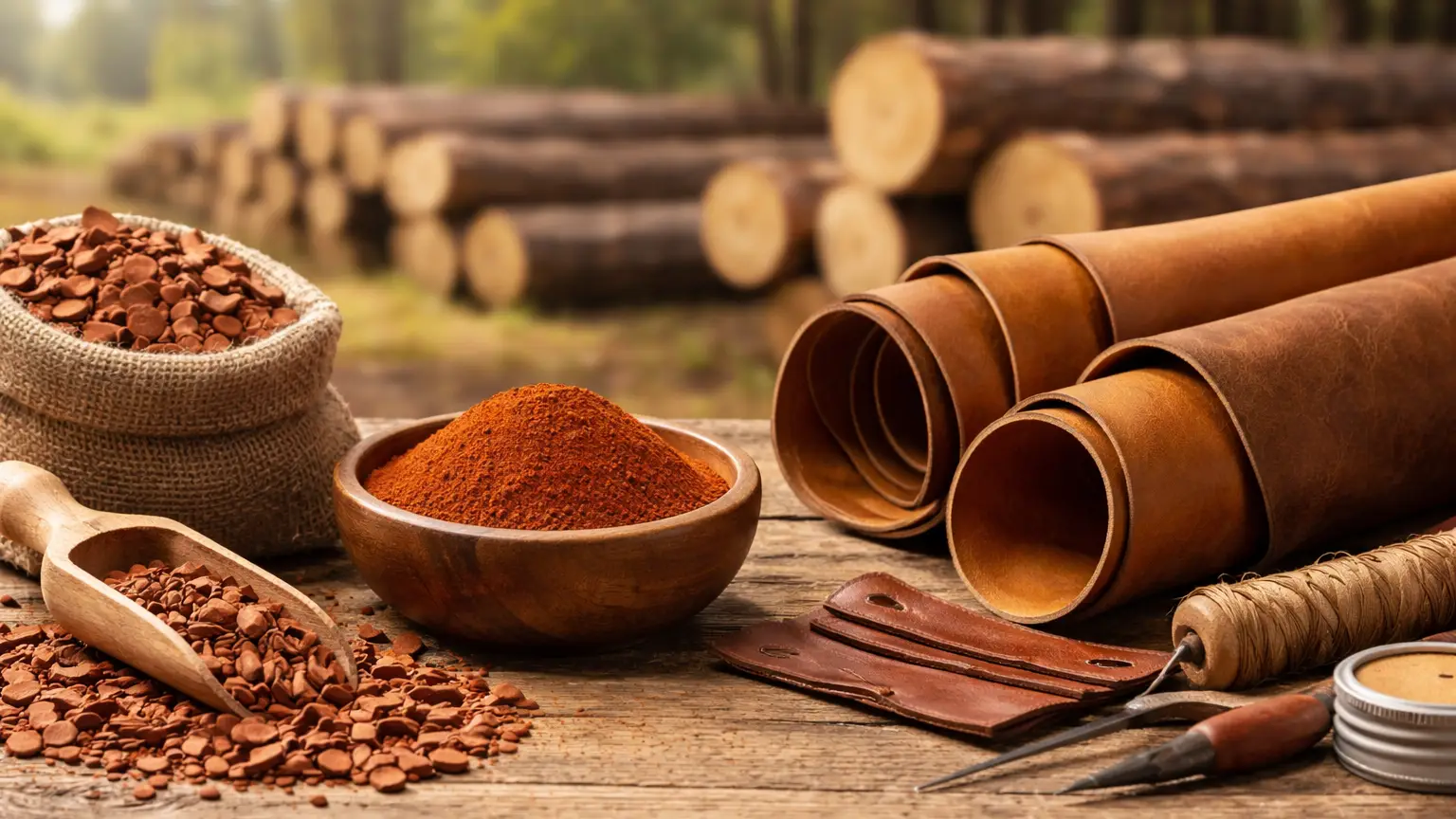
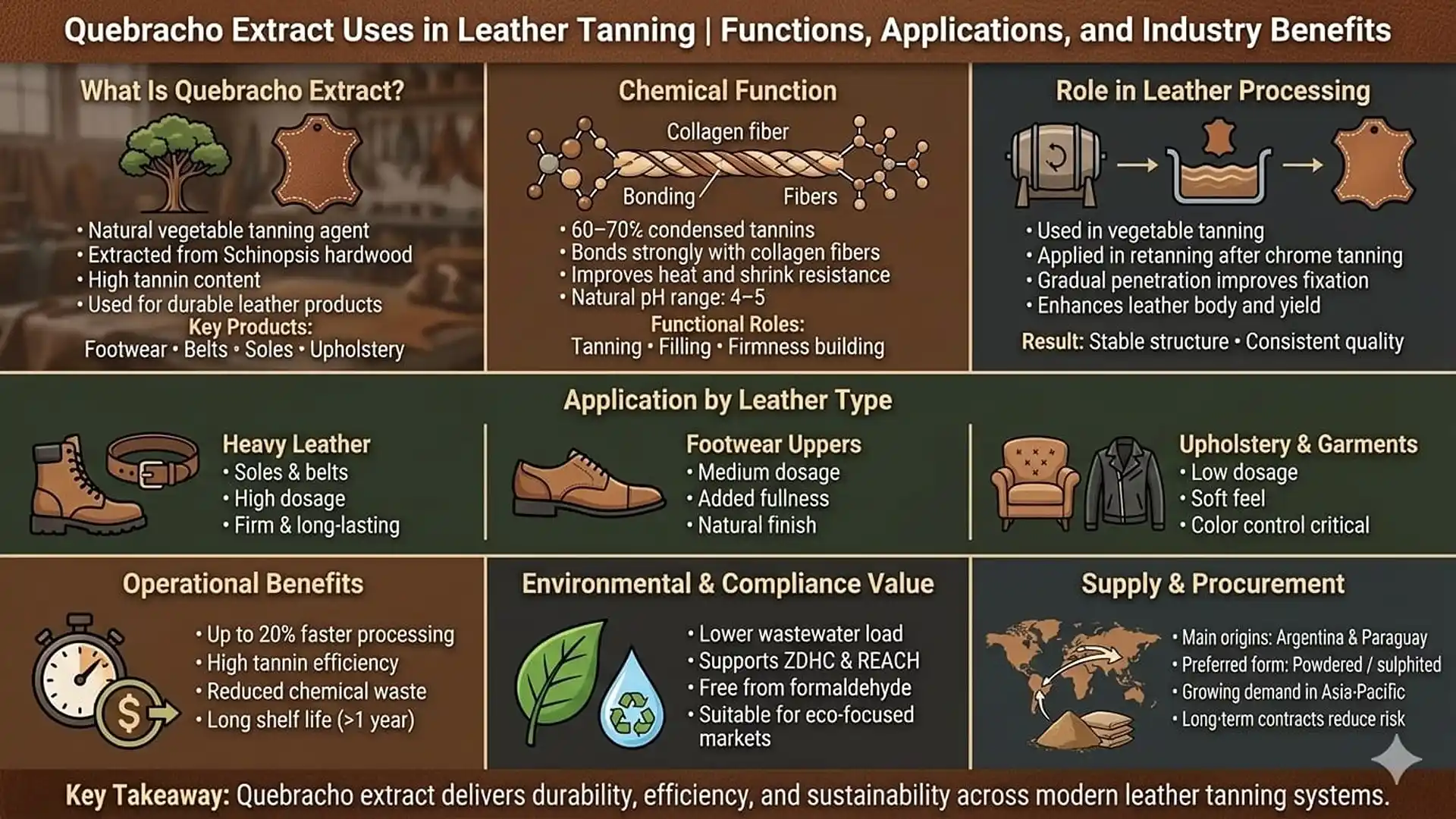
Quebracho Extract is a concentrated tannin obtained through the hot water extraction of the shredded heartwood of the Schinopsis species, primarily found in the Gran Chaco region of Argentina and Paraguay. Its chemical composition is rich in condensed tannins (proanthocyanidins), which are polymers known for their excellent ability to cross-link with collagen fibers in animal hides. This cross-linking is the essence of tanning, stabilizing the protein structure against heat, moisture, and microbial decay. The extract is commercially available in various forms, most commonly as a spray-dried powder or as a viscous liquid, allowing for flexibility in handling and dosing within the tannery.
In terms of specifications, high-quality Quebracho Extract for tanning typically has a tannin content of 70-75% (measured by the official Hide Powder method), with non-tannins and insolubles making up the remainder. Its pH is generally acidic. A key characteristic is its color-imparting property, yielding leathers in a characteristic pinkish to reddish-brown hue, which can be modified with dyes. Compared to other vegetable tannins like chestnut or mimosa, Quebracho is known for its rapid penetration and high astringency, making it efficient for producing firm, heavy leathers. For consistent industrial use, sourcing from reputable suppliers who ensure batch-to-batch consistency in tannin content and solubility is paramount.
Platforms like leatherchemicalsasia.com and the network of Chemtradeasia websites (chemtradeasia.sg, chemtradeasia.ae, etc.) serve as critical hubs for technical data sheets, safety information (MSDS/SDS), and procurement of standardized Quebracho Extract. This ensures that tanneries have access to a reliable product that meets the precise technical requirements for their specific leather grades, whether for sole leather, belting, upholstery, or fashion accessories.
Key Applications and Benefits in Modern Leather Production
The application of Quebracho Extract in modern tanneries is versatile. It is extensively used in the production of heavy leathers, such as those for shoe soles, industrial belting, and saddlery, where its ability to produce a dense, firm, and highly durable leather is unmatched. In combination tanning, it is frequently employed as a pre-tannage or re-tannage alongside chrome or synthetic tannins. This hybrid approach leverages the best of both worlds: the speed and hydrothermal stability of chrome with the natural fullness, biodegradability, and unique character imparted by Quebracho. It is also a staple in the production of vegetable-tanned upholstery leather for automotive and furniture, prized for its natural look and feel.
The benefits of using Quebracho Extract are multifaceted. From an environmental standpoint, it is a renewable, biodegradable material that significantly reduces the heavy metal load in tannery effluent. The resulting leather is also more easily disposable or recyclable at the end of its life cycle. Technically, it imparts excellent grain tightness, a plump feel, and good moldability to leather. From a marketing and sales perspective, leather labeled as "vegetable-tanned with Quebracho" commands a market premium, appealing to brands and consumers seeking sustainability and natural provenance. This aligns perfectly with the corporate social responsibility (CSR) goals of many manufacturing entities in Asia.
The 2026 Asian Market: Trends, Drivers, and Forecasts
Projecting towards 2026, the market for Quebracho Extract in Asia is poised for steady growth, estimated at a CAGR of 5-7%, outpacing the overall leather chemicals market. This growth will be geographically uneven but widespread. India and Bangladesh, with their massive footwear export industries, are focusing on sustainable leather to maintain EU and North American market access. Vietnam and Indonesia are emerging as hubs for high-value leather goods and upholstery, where the aesthetic of vegetable-tanned leather is a key selling point. China's market is evolving towards higher-quality, environmentally compliant production, driving demand for premium tanning agents.
Key drivers beyond regulation include technological advancements in vegetable tanning processes that reduce production time and improve consistency, making it more competitive with chrome tanning. The circular economy model is gaining traction, where vegetable-tanned leather fits perfectly due to its natural composition. Potential challenges include price volatility of raw Quebracho wood, competition from other vegetable tannins and synthetic alternatives, and the need for continuous technical training within tanneries. However, the overarching trend towards bio-based materials in manufacturing strongly favors the long-term adoption of Quebracho Extract.
Sourcing and Supply Chain Considerations
For an Asian tannery, establishing a reliable supply chain for Quebracho Extract is critical. The journey begins in South America, where sustainable forestry practices are increasingly important to ensure long-term supply and meet the certification requirements of end brands. Importers and regional distributors play a vital role in ensuring logistical efficiency, quality control, and technical support. This is where established B2B platforms and chemical suppliers demonstrate their value.
Entities like the Chemtradeasia network (with portals like chemtradeasia.in for India, chemtradeasia.co.id for Indonesia, and chemtradeasia.ae for the Middle East gateway) provide more than just a sales channel. They offer localized logistics, inventory management, and crucially, technical liaison services. Before procurement, tanneries must verify product specifications, request and review Safety Data Sheets (SDS), and often conduct pilot trials. Partnering with a supplier that has deep domain knowledge in leather chemicals ensures access to consistent quality, competitive pricing, and the support needed to integrate Quebracho Extract successfully into existing production protocols.
Conclusion
The trajectory for Quebracho Extract in Asia's leather industry is unequivocally positive. As the region consolidates its position as the global leather workshop, the integration of sustainable, high-performance tanning agents is not an option but a necessity for future growth and compliance. Quebracho Extract, with its robust tanning properties and natural origin, is perfectly positioned to meet this demand. It enables tanneries to produce leather that satisfies both the stringent quality standards of international markets and the evolving ethical expectations of consumers.
Embracing this shift requires strategic sourcing, process adaptation, and a commitment to quality. By leveraging the supply chains and expertise offered by specialized chemical suppliers operating across the region, Asian tanneries can harness the power of vegetable tanning to build a more resilient, profitable, and sustainable future. The year 2026 will likely see Quebracho Extract transition from a specialized alternative to a mainstream tanning material in the portfolios of forward-thinking leather producers across the continent.
Disclaimer: This article is for informational and market insight purposes only. It is not intended as technical, safety, or professional advice for the handling or application of tanning materials. The data and trends presented are based on current market analysis and are subject to change. Readers are strongly advised to verify all information independently, consult official technical documentation (including Material Safety Data Sheets - MSDS/SDS), and engage with qualified technical experts or contact our team for specific application guidance, formulations, and safety protocols.
Leave a Comment