Introduction
Quebracho extract remains an important vegetable tanning material for the Asia-Pacific leather industry. As leather production continues to expand across the region, procurement teams are closely watching supply security, import dependence, and price movement heading into 2026. The product’s strong tanning performance and natural profile keep it relevant despite changing regulations and cost pressures.
Market Signals for 2026
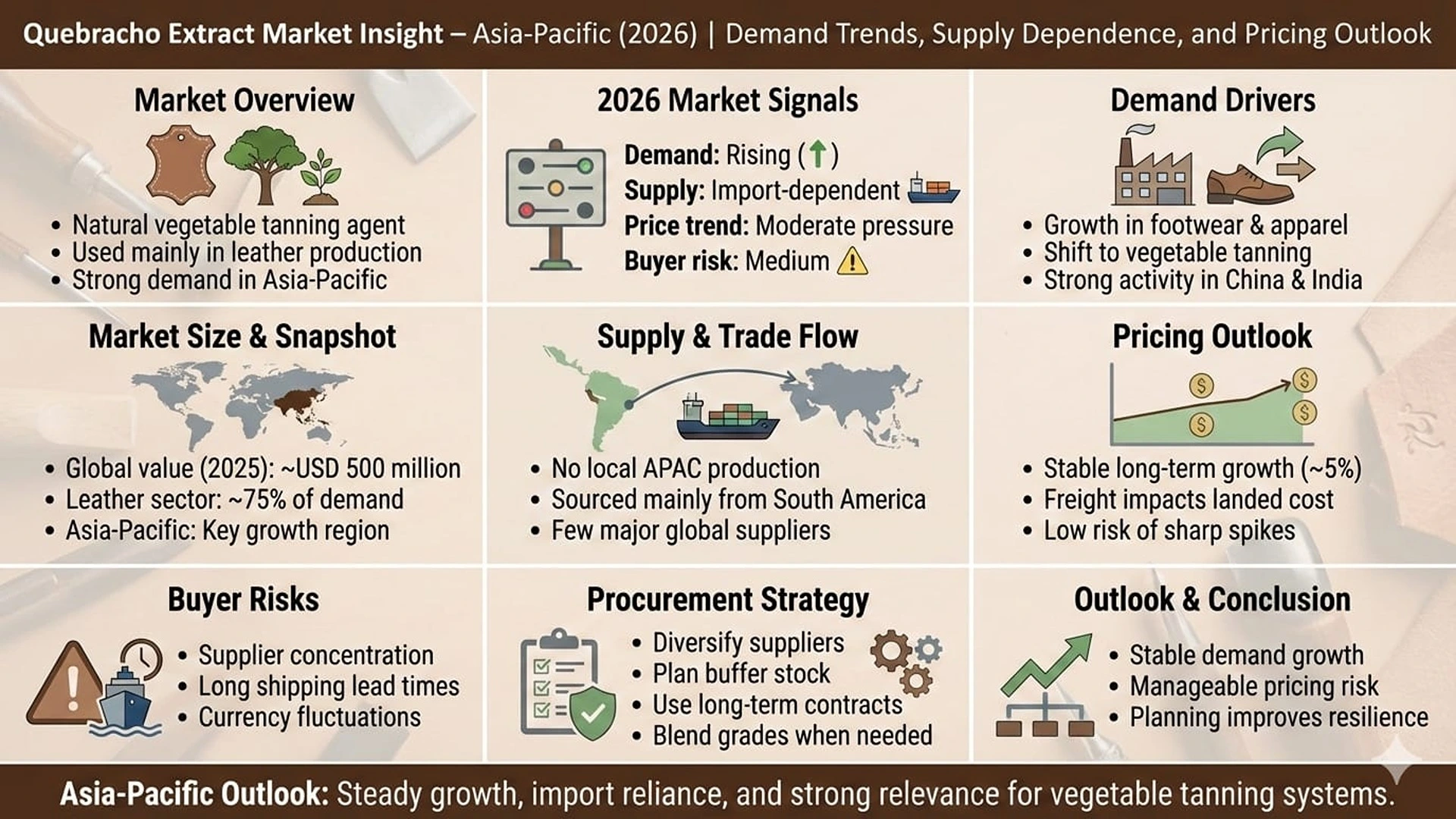
Demand for quebracho extract in Asia-Pacific is expected to keep rising. The leather industry accounts for roughly three-quarters of global consumption, and regional growth is led by China and India. Expansion in footwear, apparel, and leather goods manufacturing continues to support steady intake of vegetable tanning agents.
Supply remains import-driven. Asia-Pacific has no meaningful local production, as quebracho trees grow mainly in South America. This makes regional buyers dependent on long shipping routes and overseas suppliers.
Pricing pressure is moderate. While raw material availability and global economic changes can cause short-term swings, the market is supported by a stable growth rate of around 5% per year. This helps prevent sharp price spikes under normal conditions.
Buyer risk sits at a medium level. A small number of large suppliers control a significant share of global output, which increases exposure to supply disruption. At the same time, more focus on sustainable forestry and certified sourcing is improving long-term stability.
Current Market Snapshot
Asia-Pacific leather production is expected to maintain steady demand for quebracho extract through 2026. The global market was valued at about USD 500 million in 2025 and is forecast to grow at a consistent pace through the next decade. Most regional demand comes from leather tanneries, which remain the dominant end-use sector.
Trade flows highlight strong reliance on South American producers. With limited alternatives, regional distributors focus on maintaining steady import volumes. Pricing remains relatively balanced, though landed costs are influenced by freight rates and port congestion. Buyers with established contracts and predictable volumes are better positioned to manage cost and supply risks.
Key Demand Drivers
Sustainability remains a major driver. Many tanneries in Asia-Pacific are moving toward vegetable and combination tanning systems to meet buyer and regulatory expectations. Quebracho extract fits well into this shift due to its natural origin and reduced environmental impact compared with some synthetic agents.
Growth in footwear and apparel production, especially in China and India, continues to support demand. Rising domestic consumption and export orders require durable leather with consistent quality, which keeps high-tannin extracts in regular use.
Environmental regulations are also shaping demand. Policies that limit harmful chemicals and encourage cleaner effluent profiles push tanneries to favor proven vegetable tanning materials like quebracho.
Supply and Availability Outlook
Supply into Asia-Pacific will remain almost fully dependent on imports in 2026. South America continues to dominate production, supported by established extraction infrastructure and access to raw wood resources. A small group of major suppliers controls much of the global capacity, allowing them to serve large volumes but also creating market concentration.
Powdered quebracho extract remains the preferred form for export due to easier storage and lower transport costs. Ocean freight volatility is still a concern, though no severe supply shortages are expected under current conditions. Some supplier consolidation activity may tighten spot availability, making advance planning more important for buyers.
Buyer Considerations
Procurement teams should focus on reducing reliance on a single supplier. Working with multiple approved sources helps lower exposure to delays or disruptions. Compliance with regional chemical and environmental standards should remain a key selection factor.
Lead times for imports from South America typically range from four to eight weeks. Buffer stock planning is important, especially for buyers operating near major ports with high traffic levels. Pricing risk is linked to currency movement and variation in tannin yield, making fixed-volume or long-term contracts a useful tool for cost control.
Blending strategies using different origins or grades can also help balance price and performance without sacrificing leather quality.
Conclusion
The Asia-Pacific quebracho extract market is set for steady growth in 2026, supported by strong leather production and rising interest in natural tanning solutions. While supply dependence on South America and supplier concentration present ongoing risks, the overall outlook remains stable. Buyers who plan ahead, diversify sourcing, and secure volume agreements are best positioned to manage pricing and supply challenges.
As a sourcing partner, Leatherchemicalsasia supports procurement teams with market visibility, supplier access, and logistics coordination to navigate the evolving Asia-Pacific quebracho extract landscape.
Leave a Comment