Introduction
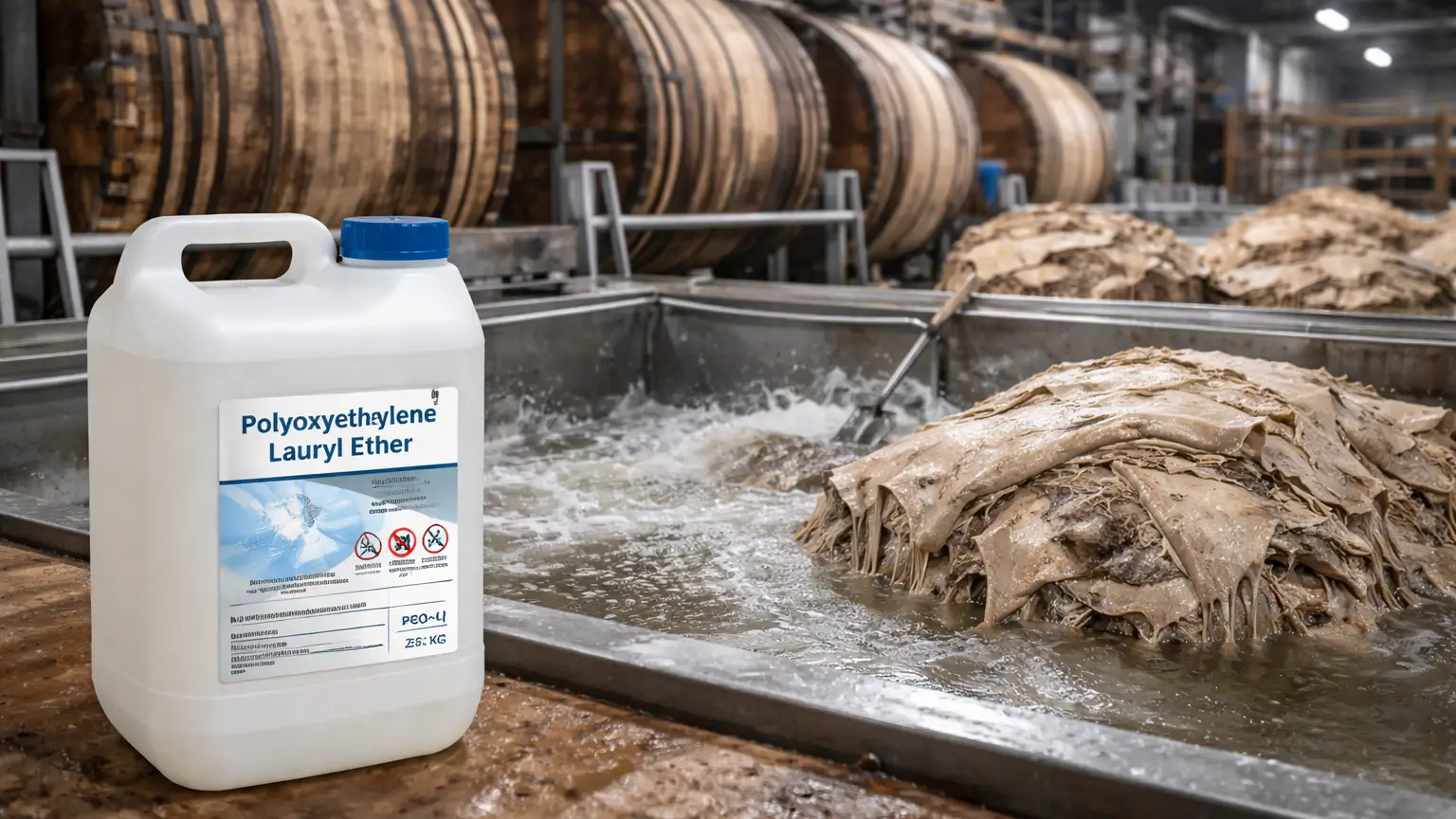
The Asian leather industry, a global powerhouse, stands at a crucial juncture where efficiency, quality, and sustainability are no longer optional but imperative for competitive advantage. As we look towards 2026, the focus on optimizing foundational processes like soaking has intensified. The soaking stage, the very first wet operation, sets the tone for the entire leather-making process. It is here that innovative chemical auxiliaries are making a profound impact. Among these, Polyoxyethylene Lauryl Ether has emerged as a superior non-ionic surfactant and degreasing agent, revolutionizing how tanners in Asia prepare raw hides and skins.
This article provides a comprehensive analysis of the application, benefits, and market trajectory of Polyoxyethylene Lauryl Ether as a degreasing agent in leather soaking, with a specific focus on the Asian market's evolution towards 2026. We will explore its chemical functionality, its alignment with regional industry trends, and its role in driving more sustainable and profitable leather production. For industry professionals sourcing from platforms like chemtradeasia.com, chemtradeasia.in, or specialized portals like leatherchemicalsasia.com, understanding this product's value proposition is key to future-proofing operations.
The Critical Role of Soaking in Leather Manufacturing
Soaking is the process of rehydrating cured (salted or dried) hides and skins to restore them to a raw, flaccid state. This step is deceptively simple but critically important. Ineffective soaking can lead to a cascade of problems downstream, including uneven dyeing, poor fatliquoring, and weak grain strength. The primary objectives are to remove dirt, blood, soluble proteins, and preservative salts. However, a more challenging objective is the partial removal of natural fats and grease, which are particularly abundant in hides from certain regions and breeds.
Excess natural grease interferes with the penetration of subsequent chemicals like liming and tanning agents. Traditional soaking methods often relied on high water consumption, extended processing times, and basic alkalis, which were inefficient at emulsifying and removing these hydrophobic grease molecules. This inefficiency not only wasted resources but also created inconsistent leather quality and increased the biological load in effluent. The modern soaking process, therefore, demands specialized surfactants that can effectively penetrate, emulsify, and suspend greases for easy removal without damaging the collagen structure of the hide.
The Asian market, with its diverse raw material sources—from the heavy, greasy buffalo hides of South Asia to the sheepskins of East Asia—faces unique challenges. A one-size-fits-all approach to soaking is ineffective. This variability necessitates high-performance, adaptable soaking agents that can handle different grease types and concentrations, making the choice of surfactant a pivotal decision for tanneries aiming for consistency and high yield.
Polyoxyethylene Lauryl Ether: A Deep Dive into the Product
Polyoxyethylene Lauryl Ether, often categorized under the broader family of alcohol ethoxylates, is a non-ionic surfactant with a specific molecular structure ideal for leather soaking. Its molecule consists of a hydrophobic (water-repelling) lauryl (C12) alcohol chain attached to a hydrophilic (water-loving) polyoxyethylene (ethylene oxide) chain. This structure is key to its function: the hydrophobic tail solubilizes and penetrates fat globules, while the hydrophilic head allows the formed emulsion to be dispersed and rinsed away in the aqueous soaking bath.
As a non-ionic surfactant, it offers distinct advantages in the soaking process. Its performance is less affected by water hardness or the presence of electrolytes (like the salts being washed out of the hide) compared to anionic surfactants. It is also compatible with a wide range of other chemicals used in pre-tanning. Typical application specifications involve using it at a dosage of 0.5% to 1.5% on the soaked weight of hides, often in combination with small amounts of alkali, at temperatures between 20-28°C. Its low-foaming characteristic is a significant operational benefit, allowing for better mechanical action in drums without excessive foam generation.
When compared to older-generation degreasing agents like simple alkaline solutions or more aggressive solvents, Polyoxyethylene Lauryl Ether provides a balanced, controlled degreasing action. It removes enough grease to ensure uniform processing but avoids over-degreasing, which can lead to a harsh, empty-feeling leather. This controllability is a major reason for its growing adoption in precision leather manufacturing across Asia.
Key Benefits and Features for Modern Leather Processing
The adoption of Polyoxyethylene Lauryl Ether in leather soaking delivers a multitude of tangible benefits that directly impact a tannery's bottom line and product quality. Firstly, it significantly enhances process efficiency. By effectively emulsifying natural fats, it reduces the soaking time required and improves the water absorption of hides. This leads to faster turnaround times in the beamhouse, increasing overall production capacity. The more complete removal of interfibrillary grease also ensures better and more uniform penetration of liming, deliming, and tanning chemicals later in the process.
Secondly, it directly contributes to superior leather quality. Leather produced from a well-soaked hide exhibits a cleaner, more pronounced grain, fewer defects related to grease spots, and achieves more even dyeing and fatliquoring. The physical properties, such as tensile strength and softness, are also improved due to the more homogeneous structure resulting from uniform chemical penetration. For tanneries producing high-value automotive, upholstery, or premium footwear leather, this consistency is non-negotiable.
From an environmental and economic standpoint, its benefits are equally compelling. Efficient degreasing reduces the organic load (FOG - Fats, Oils, and Grease) in the soaking effluent, simplifying wastewater treatment and reducing associated costs. Furthermore, by operating effectively at lower temperatures and shorter durations, it contributes to significant savings in water and energy consumption. This aligns perfectly with the global push for greener manufacturing and helps Asian tanneries comply with increasingly stringent environmental regulations.
Market Trends and the 2026 Outlook for Asia
The Asian leather chemicals market is undergoing a significant transformation, driven by several converging trends. There is a strong movement towards consolidation and technological upgrading, especially in major producing nations like India, China, Vietnam, and Bangladesh. Tanneries are investing in automation and consistent chemical dosing systems, which favor the use of reliable, high-performance products like Polyoxyethylene Lauryl Ether. The demand for chemical transparency and traceability is also rising, particularly from global brands sourcing leather from the region.
Looking ahead to 2026, the integration of sustainability into core operations will be the dominant theme. Regulations on wastewater discharge, particularly concerning FOG and COD levels, will become stricter. Polyoxyethylene Lauryl Ether, with its efficacy in reducing FOG at source, positions itself as a critical component in sustainable beamhouse management. Furthermore, the trend towards "right-first-time" manufacturing to reduce waste and rework will increase the value of auxiliaries that ensure process reliability from the very first step.
The growth of specialized chemical sourcing platforms such as chemtradeasia.com, chemtradeasia.sg for Southeast Asia, and chemtradeasia.ae for the Middle East linkage, is facilitating easier access to quality-assured chemicals for tanneries of all sizes. These platforms, along with dedicated industry portals like leatherchemicalsasia.com, are not just marketplaces but sources of technical information, helping to disseminate best practices for products like advanced soaking agents. This digitalization of supply chains will accelerate informed adoption across the continent.
Sourcing and Application Best Practices
For tanneries seeking to integrate Polyoxyethylene Lauryl Ether into their process, strategic sourcing is the first step. Partnering with reputable suppliers who provide consistent quality, technical data sheets (TDS), and material safety data sheets (MSDS/SDS) is crucial. Regional platforms like chemtradeasia.co.id in Indonesia or chemtradeasia.in in India offer localized access to verified products, ensuring supply chain resilience and support. It is advisable to request samples for mill trials to determine the optimal dosage for specific hide types and local water conditions.
In application, best practices start with proper hide preparation. Ensuring a good initial wash to remove gross dirt and salt is important. The surfactant should be added after the hides are initially wetted, often in the first change of the soaking bath. Maintaining the recommended temperature range (typically ambient to 28°C) and drum speed (12-15 rpm) is vital for mechanical action without causing hide damage. Process control through simple checks, like measuring the grease content of the soak liquor or assessing the softness and water content of the soaked hides, can help fine-tune the process for maximum efficiency.
Finally, it is important to view soaking not in isolation but as part of an integrated beamhouse process. The performance of Polyoxyethylene Lauryl Ether can be synergistically enhanced when used as part of a balanced soaking recipe, potentially including mild biocides to prevent bacterial growth and pH regulators. Collaboration with chemical suppliers for on-site technical audits can unlock further optimization, tailoring the application to the unique infrastructure and product goals of each tannery.
Conclusion
As the Asian leather industry marches towards 2026, the emphasis on foundational excellence has never been greater. The soaking process, once considered a basic preparatory step, is now recognized as a critical determinant of final leather quality, production efficiency, and environmental footprint. Polyoxyethylene Lauryl Ether stands out as a technologically advanced solution that addresses these multifaceted demands. Its role as an efficient, controllable, and sustainable degreasing agent makes it an indispensable tool for tanneries aiming to produce consistent, high-quality leather while adhering to modern economic and environmental standards.
The convergence of market trends—digital sourcing via platforms like the Chemtradeasia network, the drive for sustainability, and the demand for premiumization—creates a powerful tailwind for the adoption of such specialized wet-end chemicals. By investing in and mastering the application of high-performance soaking agents, Asian leather manufacturers can solidify their competitive edge on the global stage, ensuring not just growth but sustainable and profitable growth in the years to come.
Disclaimer: This article is for informational and market insight purposes only. It is not intended as technical, safety, or professional advice. The information presented regarding chemical applications, trends, and forecasts should be verified independently. We strongly advise readers to consult official technical data sheets (TDS), safety data sheets (SDS/MSDS), and engage with qualified technical experts for specific application guidance, process integration, and safety protocols. Always conduct trials under controlled conditions to determine suitability for your specific operational context.
Leave a Comment