Introduction
The global trade in critical minerals and their downstream chemical derivatives is undergoing a profound transformation, driven by geopolitical shifts, technological advancement, and stringent environmental regulations. At the heart of this evolution for Southeast Asia is Indonesia, a nation endowed with vast mineral resources, now strategically positioning itself beyond raw material exports into value-added chemical manufacturing. Among these high-value chemicals, fluorotitanate compounds, particularly Potassium Fluorotitanate, are emerging as pivotal materials with significant implications for industries ranging from metallurgy to, most notably, leather processing.
This article provides a comprehensive analysis of Indonesia's fluorotitanate supply chain as projected towards 2026. It delves into the market dynamics, trade policies, and industrial applications that define this niche yet critical sector. With a specific focus on the leather industry—a major consumer of titanium-based tanning agents—we will explore how products like Potassium Fluorotitanate are sourced, processed, and integrated into modern manufacturing. Platforms such as chemtradeasia.com, chemtradeasia.co.id, and leatherchemicalsasia.com are instrumental in connecting this specialized supply with global demand, facilitating trade and technical exchange.
Indonesia's Strategic Position in the Global Fluorotitanate Market
Indonesia's dominance in nickel production is well-documented, but its potential in titanium-bearing minerals like ilmenite and rutile is a burgeoning narrative. As the world's largest archipelagic nation, Indonesia possesses substantial reserves of these ores, which are the primary raw materials for titanium dioxide (TiO2) and, subsequently, fluorotitanate salts. The government's downstreaming policy, which restricts the export of unprocessed minerals, is a deliberate strategy to capture more value domestically. This policy directly impacts the fluorotitanate supply chain, encouraging the establishment of local chemical processing plants to convert titanium intermediates into specialized compounds like Potassium Fluorotitanate.
By 2026, this policy is expected to mature, creating a more resilient and integrated domestic chemical industry. Indonesia is poised to transition from a net exporter of raw ilmenite to a significant regional supplier of processed titanium chemicals. This shift reduces reliance on imports from traditional suppliers like China and Australia, creating a new trade dynamic within Asia. For global buyers and specific industry segments like leather tanning, this means a potential diversification of supply sources, potentially offering greater stability and competitive pricing. The role of regional trading hubs, represented by domains like chemtradeasia.sg and chemtradeasia.ae, will be crucial in marketing Indonesian-origin fluorotitanates to international markets.
Understanding Potassium Fluorotitanate: A Key Product for Modern Industry
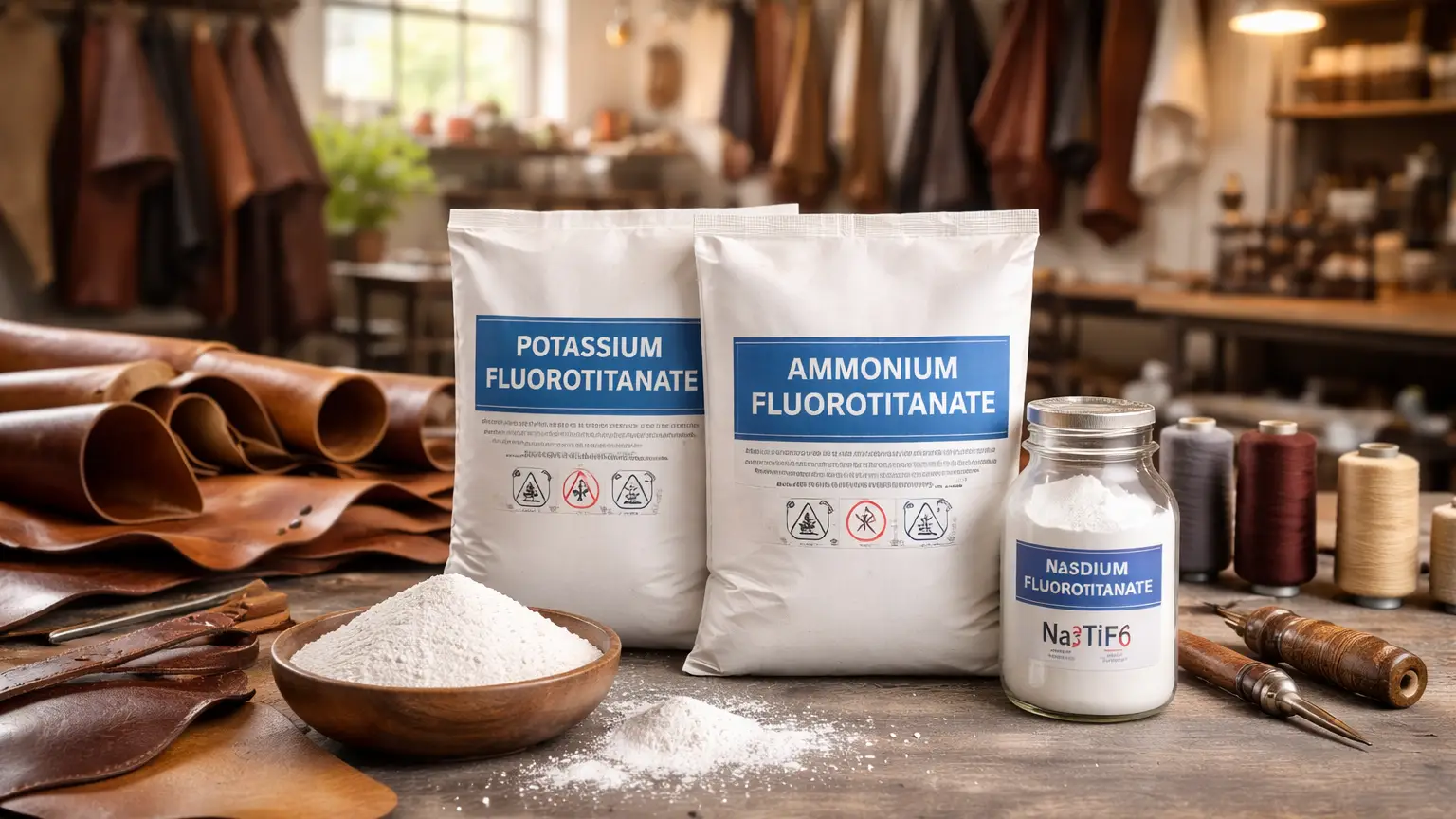
Potassium Fluorotitanate (K2TiF6) is a white crystalline powder that represents a specialized and highly functional form of titanium chemistry. Unlike titanium dioxide used primarily for pigment, fluorotitanates are valued for their unique reactivity and properties. The compound is synthesized through the reaction of titanium tetrafluoride or other titanium intermediates with potassium fluoride, requiring controlled industrial processes to ensure high purity and consistent particle size, which are critical for its performance in end-use applications.
Key specifications for industrial-grade Potassium Fluorotitanate typically include a minimum assay of 98% purity, controlled levels of heavy metal impurities, and specific mesh size (often 100-200 mesh) to ensure easy dissolution and reaction. Its defining characteristic is the release of active titanium ions in solution, which can form stable complexes with organic and inorganic matrices. This makes it indispensable in several high-tech applications, including the production of titanium metal via the Kroll process, as a flux in aluminum and magnesium alloy welding, and in the manufacturing of optical glasses and ceramics. However, its most significant and growing application is in the leather industry as a modern tanning and filling agent.
Applications and Benefits in the Leather Processing Sector
The leather tanning industry is increasingly moving towards more efficient, environmentally compliant, and high-performance chemicals, and Potassium Fluorotitanate is at the forefront of this shift. It serves as a highly effective mineral tanning agent, often used in combination with other tannins like chromium or synthetic polymers. Its primary function is to cross-link with collagen fibers in the hide, resulting in leather with exceptional characteristics that meet modern market demands.
The benefits of using Potassium Fluorotitanate in leather processing are multifaceted. Firstly, it produces leather with a bright, clean white color, which is ideal for subsequent dyeing and finishing, offering vibrant final shades. Secondly, it imparts excellent thermal stability and shrinkage resistance, meaning the leather maintains its structure and quality at higher temperatures. Thirdly, leather tanned with titanium compounds exhibits superior fullness, softness, and a fine, tight grain, enhancing the premium feel of the final product. From an environmental and operational standpoint, titanium tanning can offer a potential alternative or supplement to traditional chrome tanning, aligning with stricter global regulations on heavy metal discharge. Resources like leatherchemicalsasia.com provide vital technical data and sourcing links for tanneries looking to adopt or optimize the use of this advanced chemical.
Navigating the Supply Chain: From Mine to Market
The journey of Potassium Fluorotitanate to an Indonesian port or a foreign tannery is a complex, multi-stage process. It begins with the mining and beneficiation of titanium ores (ilmenite/rutile) in regions like Bangka Belitung or Kalimantan. The concentrated ore is then processed, often via the chloride or sulfate route, to produce titanium tetrachloride (TiCl4) or titanium sulfate, which are key intermediates. These intermediates are then fluorinated and reacted with potassium salts in specialized chemical plants to produce the final Potassium Fluorotitanate product.
Logistics and trade facilitation form the next critical link. Given the chemical's hygroscopic nature, it requires dry, sealed packaging—typically in 25 kg polyethylene-lined woven bags—and careful handling during storage and transportation. Indonesian exporters must navigate domestic logistics, customs clearance under specific Harmonized System (HS) codes, and international shipping regulations for chemicals. This is where integrated chemical marketplace platforms prove invaluable. A network such as the Chemtradeasia group (chemtradeasia.com, chemtradeasia.in, chemtradeasia.co.id) streamlines this process by connecting certified Indonesian manufacturers with verified global buyers, managing inquiries, sample requests, and logistical coordination, thereby de-risking the international procurement process for essential industrial chemicals.
Challenges and Future Outlook for 2026 and Beyond
Despite a promising trajectory, Indonesia's fluorotitanate supply chain faces notable hurdles. The capital intensity of establishing world-class chemical processing facilities remains high, requiring significant foreign direct investment and technology transfer. Consistency in product quality to meet stringent international standards is an ongoing focus for local manufacturers. Furthermore, global competition is fierce, with established Chinese producers dominating the market through scale and integrated supply chains. Indonesian producers must compete not just on price but on reliability, quality certification, and sustainability credentials.
Looking ahead to 2026, several trends will shape the market. The global push for sustainable and traceable supply chains will favor producers who can demonstrate ethical sourcing and low environmental impact processing. Technological advancements in leather manufacturing may increase the specificity and demand for high-purity fluorotitanates. Indonesia's success will hinge on its ability to fully implement its downstreaming policy, foster industry-academia collaboration for R&D, and effectively leverage digital B2B platforms to reach niche markets. The evolution of specialized portals like leatherchemicalsasia.com into knowledge hubs, offering not just products but application guides and market intelligence, will be a key differentiator in connecting Indonesian supply with global demand.
Conclusion
Indonesia's journey in the fluorotitanate market encapsulates the broader ambition of resource-rich nations to move up the global value chain. For the leather industry and other manufacturing sectors, the development of a robust Indonesian supply for Potassium Fluorotitanate represents an opportunity for diversification, innovation, and potentially more sustainable sourcing. As 2026 approaches, stakeholders—from miners and chemical engineers to tanners and traders—must stay informed on regulatory changes, technological developments, and market signals.
The insights provided here are for informational and market insight purposes only. This article does not constitute technical, safety, or professional advice. Specifications, applications, and regulatory status of chemicals can change. We strongly advise all readers and potential users to independently verify any information presented, consult official technical data sheets and Material Safety Data Sheets (MSDS/SDS), and engage with qualified experts for specific applications, formulations, and compliance requirements. For precise product inquiries and sourcing, please contact our specialist teams through our official platforms.
Leave a Comment