Introduction
The global leather industry stands at a pivotal juncture, balancing centuries-old craftsmanship with the urgent demands of sustainability and technological innovation. Nowhere is this evolution more dynamic than in Asia, the undisputed epicenter of leather production. As we look towards 2026, chrome tanning, the process responsible for over 80% of the world's leather, continues to be refined and reimagined. At the heart of this process lies a fundamental material: Basic Chromium Sulphate (BCS). This article delves into the projected trends for chrome tanning in 2026, with a specific focus on the indispensable role of BCS in producing high-quality wet blue leather, and provides crucial insights for stakeholders navigating the complex Asian market.
The narrative is no longer just about volume and cost; it is increasingly defined by efficiency, environmental responsibility, and supply chain resilience. Asian tanneries in key hubs like India, Bangladesh, Vietnam, and Indonesia are under pressure to adopt best practices while maintaining competitiveness. Understanding the future trajectory of chrome tanning and the specifications of its core chemical, Basic Chromium Sulphate, is essential for any business involved in wet end operations. This analysis will explore the technological, regulatory, and market trends set to define the industry, offering a roadmap for procurement and production strategy.
The Unwavering Role of Basic Chromium Sulphate in Modern Tanning
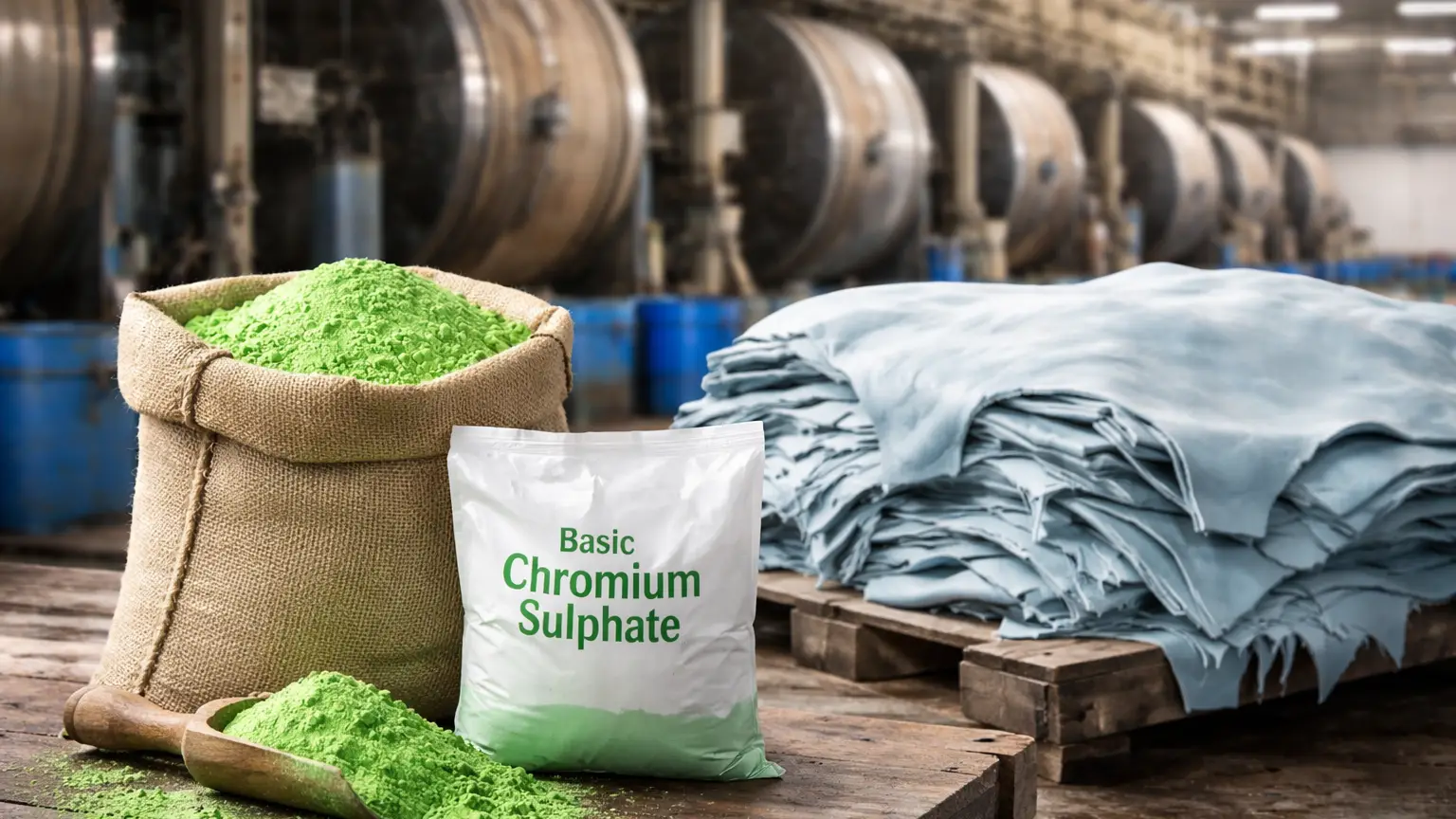
Basic Chromium Sulphate [Cr(OH)SO4] is not merely a chemical; it is the cornerstone of modern chrome tanning. Its primary function is to cross-link with the collagen fibers in raw hides, transforming perishable skin into stable, durable, and versatile wet blue leather. The "basic" in its name refers to its degree of basicity, a critical parameter typically ranging from 33% to 42%, which determines its reactivity and penetration characteristics. A higher basicity product offers faster fixation but requires careful process control, making the selection of the right BCS grade a technical decision with direct implications for quality and yield.
The advantages conferred by Basic Chromium Sulphate are profound. It delivers leather with excellent hydrothermal stability (high shrinkage temperature), superior dye uptake, and a soft, full grain that is highly prized for upholstery, automotive interiors, and high-end footwear. The efficiency of the chrome tanning process, often completed within a day, provides a significant economic advantage. Despite the rise of alternative tanning agents, no single material has yet matched the combination of performance, cost-effectiveness, and processing speed offered by a well-formulated BCS tanning system. Its role in the wet end process remains fundamentally irreplaceable for mass production.
Specifications for quality Basic Chromium Sulphate are stringent. Beyond basicity, key parameters include chromium oxide (Cr2O3) content (usually 24-26%), which indicates the actual tanning power, and low levels of impurities like iron, aluminum, and chlorides. Impurities can lead to off-color leather (e.g., greenish or bluish tints) and reduced strength. Leading suppliers, such as those accessible through platforms like chemtradeasia.com and leatherchemicalsasia.com, provide detailed Certificates of Analysis to ensure batch-to-batch consistency, which is vital for tanneries aiming for uniform quality in their wet blue output.
Asia's Leather Landscape: Driving Forces and Market Dynamics
Asia's dominance in leather manufacturing is built on a complex ecosystem of raw material availability, skilled labor, and integrated supply chains. Countries like India and Bangladesh are giants in bovine leather, while Vietnam and Indonesia have strong positions in footwear and garment leather. However, the landscape is shifting. Rising labor costs in traditional hubs, coupled with stringent international environmental and chemical compliance regulations (such as ZDHC, REACH), are pushing the industry towards greater consolidation and technological upgrading. The demand for traceability and transparency from global brands is reshaping procurement practices.
This dynamic environment directly impacts the market for tanning chemicals. There is a growing bifurcation: large, export-oriented tanneries are investing in automated dosing systems and seeking high-purity, consistent Basic Chromium Sulphate to meet international standards. Meanwhile, smaller domestic-focused units may prioritize cost, navigating a more fragmented supplier base. The price volatility of raw chromite ore and energy costs also directly influence BCS pricing, making strategic sourcing crucial. Platforms serving the region, including chemtradeasia.in for India and chemtradeasia.co.id for Indonesia, have become essential for connecting buyers with reliable suppliers who can navigate these regional complexities.
Furthermore, regional trade agreements and geopolitical factors play a significant role. Sourcing patterns are adapting, with some manufacturers looking to diversify their chemical supply chains across multiple Asian countries to mitigate risk. This underscores the importance of having a pan-Asian procurement perspective, leveraging networks that cover key markets from the Middle East (chemtradeasia.ae) to Southeast Asia (chemtradeasia.sg), ensuring a steady flow of essential leather chemicals.
Key Trends Shaping Chrome Tanning in 2026
As we advance towards 2026, several interconnected trends will define the future of chrome tanning in Asia. The foremost is the push for sustainable tanning. This does not signal the end of chrome but its optimization. The trend is towards "less is more"—achieving the same or better leather quality with reduced chromium dosage. This is driven by advanced BCS products with higher uptake efficiency (exceeding 80-85%), minimizing effluent load. Closed-loop recycling systems for chrome-laden tanning floats are also moving from pilot scale to broader commercial adoption, turning waste into a resource and addressing environmental concerns head-on.
Secondly, digitalization and process control are becoming mainstream. Smart tanning monitors that track pH, temperature, and chromium exhaustion in real-time allow for precise control of the wet end process. This data-driven approach ensures optimal use of Basic Chromium Sulphate, reduces chemical waste, and guarantees batch consistency. In 2026, we expect these technologies to be more affordable and integrated, even in mid-sized tanneries. This technological leap will be supported by chemical suppliers offering not just products, but tailored application protocols and technical service.
Finally, the trend of hybrid tanning will accelerate. Combining Basic Chromium Sulphate with other organic or metallic agents (like aluminum or zirconium) at specific stages is gaining traction. These hybrid systems can enhance specific properties—such as creating fuller leather with less chromium, or improving lightfastness for automotive leather—while maintaining the core benefits of chrome. This requires a deep understanding of chemical synergy, positioning knowledgeable suppliers and technical experts as valuable partners in product development for tanneries.
Sourcing Quality Basic Chromium Sulphate: A Buyer's Guide for Asia
For procurement managers and tannery owners, sourcing reliable Basic Chromium Sulphate is a critical business function. The first step is defining technical specifications aligned with your end-product requirements. Engage with suppliers who provide comprehensive technical data sheets and are transparent about their Cr2O3 content, basicity, and impurity profiles. Consistency is king; a supplier with robust quality control processes that ensure every bag of BCS performs identically is worth a premium, as it eliminates production variables.
Verifying the supplier's credentials is non-negotiable. Look for manufacturers with relevant international certifications (ISO, OHSAS) and a proven track record of supplying the leather industry. Evaluate their logistical capabilities and local support. Can they ensure timely delivery to your plant? Do they offer technical support to troubleshoot wet end process issues? Digital B2B platforms like the chemtradeasia.com network and specialized portals like leatherchemicalsasia.com can be invaluable starting points, aggregating vetted suppliers from across Asia and simplifying the discovery and due diligence process.
Building a strategic partnership rather than a transactional relationship is the forward-looking approach. Discuss your long-term needs with potential suppliers. Inquire about their R&D focus—are they developing high-exhaustion or low-salt BCS variants? Can they provide support for chrome recovery systems? A supplier invested in the future of sustainable tanning will be a more resilient partner. Furthermore, consider diversifying your source list across different regional hubs (e.g., using chemtradeasia.ae for Gulf suppliers and chemtradeasia.sg for Southeast Asian options) to build supply chain resilience against regional disruptions.
Conclusion
The journey towards 2026 presents a landscape of both challenge and opportunity for the Asian chrome tanning sector. Basic Chromium Sulphate will undoubtedly retain its central role, but its application will become smarter, more efficient, and more integrated into circular economy models. The tanneries that thrive will be those that embrace the trends of sustainability, digitalization, and hybrid chemistry, all while securing a reliable supply of high-quality tanning agents. The evolution is not about replacing chrome but about refining its use to meet the ethical and quality expectations of the modern world.
Success hinges on informed decision-making—from the tannery floor to the procurement office. By understanding the technical specifications of BCS, the shifting market dynamics across Asia, and the emerging best practices, businesses can position themselves competitively. Leveraging robust sourcing networks and partnering with progressive chemical suppliers will be key to navigating this future, ensuring the production of premium wet blue leather that meets global standards for performance and responsibility.
Disclaimer: This article is for informational and market insight purposes only. It is not intended as technical, safety, or professional advice. The information presented regarding chemical applications, trends, and specifications should be verified independently. We strongly advise readers to consult with qualified technical experts, refer to official documentation such as Material Safety Data Sheets (MSDS/SDS) for specific products, and contact our technical team for guidance tailored to your specific application and circumstances before making any procurement or process decisions.
Leave a Comment