Introduction
The global leather industry, a multi-billion dollar sector, relies on a handful of critical chemical inputs, with Basic Chromium Sulphate (BCS) standing as the undisputed king of modern tanning. As the primary agent responsible for converting perishable animal hides into durable, stable leather, its supply chain is the lifeblood of tanneries worldwide. Nowhere is this dynamic more pronounced than in Asia, the world's leather manufacturing powerhouse, and its intricate relationship with China, the globe's dominant producer of chromium chemicals. This article provides a comprehensive analysis of the export flows of Basic Chromium Sulphate from China to key Asian markets and projects its pivotal role in shaping the leather supply chain through 2026.
Understanding this flow is not merely an academic exercise; it is essential for tanneries, chemical distributors, and industry stakeholders across Asia. Factors such as environmental regulations in China, evolving trade policies, logistics costs, and the relentless demand for leather goods in emerging economies all converge on this single commodity. Platforms like chemtradeasia.com and its regional variants (chemtradeasia.in, chemtradeasia.co.id, etc.) serve as vital connectors in this network, facilitating the movement of Basic Chromium Sulphate from producer to end-user. We will delve into the specifications of BCS, trace its journey from Chinese chemical plants to Asian tanneries, examine the demand landscape, and offer insights for secure and efficient sourcing as we look toward 2026.
Understanding Basic Chromium Sulphate: The Tanning Cornerstone
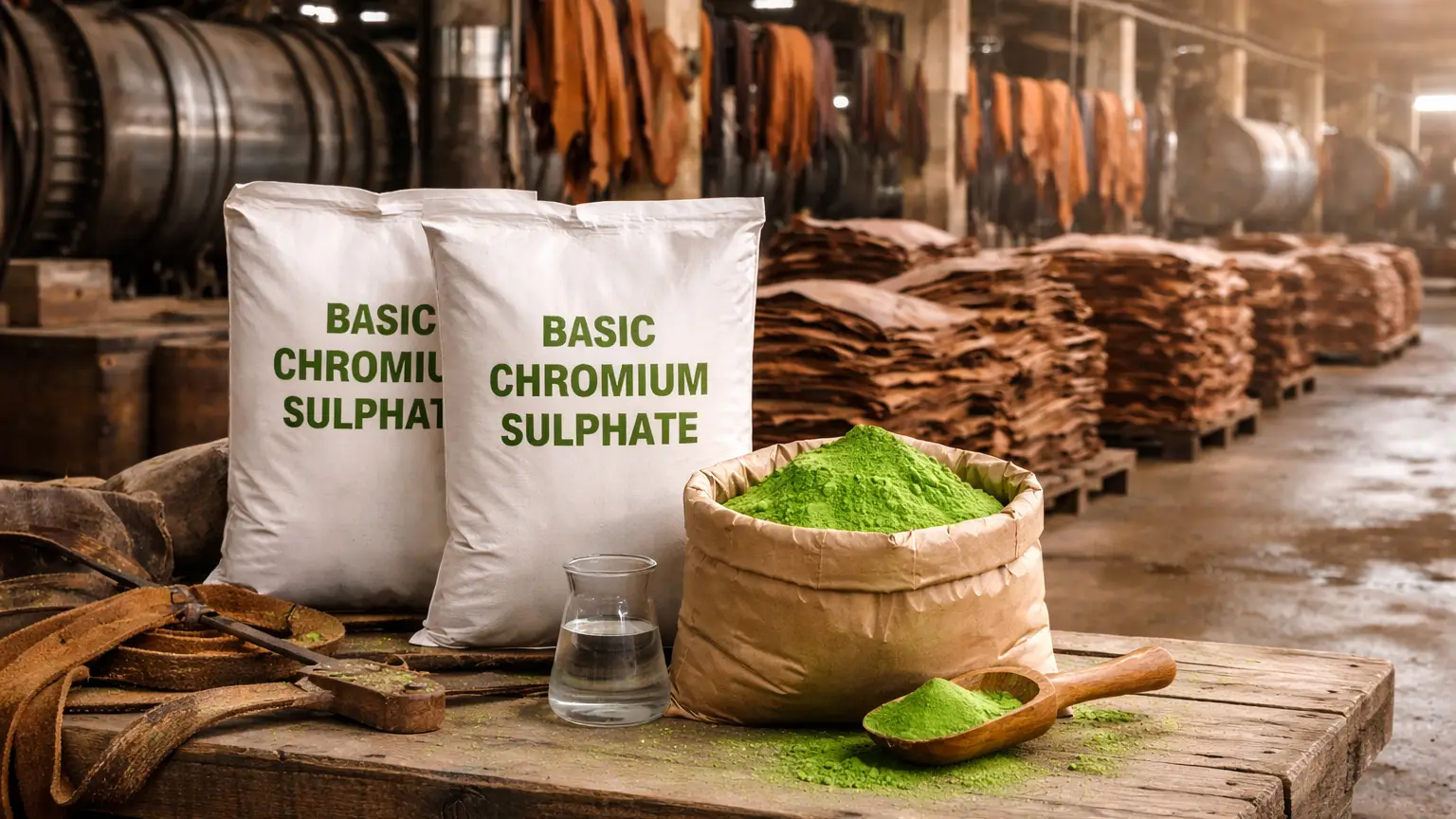
Basic Chromium Sulphate is not a single compound but a range of chromium (III) salts with varying levels of basicity, typically expressed as a percentage of Cr2O3 content. For the leather industry, the most common and critical form is a green, soluble powder or solution with a Cr2O3 content ranging from 21% to 26%. Its "basic" nature refers to the degree of neutralization of the sulphate, which directly impacts its tanning efficiency. A higher basicity (often 33% or 40%) allows for faster penetration and fixation of chromium into the hide collagen, resulting in leather that is more stable, heat-resistant, and less prone to shrinkage.
The application of Basic Chromium Sulphate in the chrome-tanning process is nearly universal for high-quality leathers. It works by forming stable cross-links between the collagen fibers, a process that takes mere hours compared to the weeks required for vegetable tanning. The resulting "wet blue" leather—named for its distinctive blue-green color—is the intermediate product shipped globally for further processing into finished goods. The consistency, purity, and basicity of the BCS used are paramount; impurities can lead to defective leather with poor dye uptake or uneven texture. This makes the role of specialized distributors and knowledge hubs like leatherchemicalsasia.com crucial, as they provide not just the chemical, but also the technical support necessary for optimal application.
China's Dominance in the Global Chromium Sulphate Supply Chain
China's position as the world's leading supplier of Basic Chromium Sulphate is built on a formidable foundation of raw material access, integrated chemical manufacturing, and economies of scale. The country possesses significant chromite ore resources and has developed extensive smelting and chemical processing capabilities. Major production hubs are concentrated in provinces like Sichuan, Gansu, and Inner Mongolia, where large-scale chemical plants produce BCS not only for domestic consumption but for export markets across Asia and beyond. This centralized production creates a powerful export engine that sets global price benchmarks and availability.
However, this dominance is increasingly shaped by stringent environmental and safety regulations. The Chinese government's "Blue Sky" initiatives and stricter controls on industrial wastewater, which can contain hexavalent chromium (a toxic by-product), have forced consolidation and technological upgrades in the sector. While this has led to temporary supply disruptions and price volatility in the past, it has also driven the industry toward producing higher-purity, more environmentally compliant Basic Chromium Sulphate. For Asian importers, this means dealing with a more professionalized but regulated supply base. The export flow is now characterized by larger, certified producers who can meet international standards, a trend that platforms such as chemtradeasia.sg and chemtradeasia.ae are well-positioned to navigate by connecting buyers with verified suppliers.
Mapping Export Flows: From Chinese Hubs to Asian Leather Centers
The export trajectory of Basic Chromium Sulphate from China follows a clear geographic and economic logic, mirroring the locations of Asia's major leather processing clusters. Primary sea routes originate from ports like Ningbo, Shanghai, and Tianjin, carrying containerized shipments of BCS powder or liquid in isotanks. The foremost destination is the Indian subcontinent, where countries like India, Pakistan, and Bangladesh host massive tanning industries in clusters such as Kanpur, Karachi, and Dhaka. These markets demand vast quantities of reliable, cost-effective BCS to fuel their export-oriented leather goods and footwear sectors.
Southeast Asia represents another critical corridor. Vietnam's rapidly growing footwear industry, Thailand's specialty leather sector, and Indonesia's robust manufacturing base all depend on consistent Chinese imports. Here, regional distribution hubs like Singapore, served by platforms like chemtradeasia.sg, play a key role in logistics and inventory management. Meanwhile, other Asian manufacturing giants, including South Korea and Taiwan, also source high-grade BCS from China for their advanced technical and automotive leather production. The efficiency of these flows—impacted by freight costs, customs clearance, and regional trade agreements—directly affects the competitiveness of the downstream leather industry across the continent.
The Asian Leather Industry: Demand Drivers and 2026 Outlook
The demand for Basic Chromium Sulphate in Asia is intrinsically linked to the health and direction of the leather industry. Key drivers include the rising middle-class consumption of leather footwear, bags, and apparel in populous nations like India, Indonesia, and Vietnam. Furthermore, Asia's role as the "factory of the world" for major global brands ensures sustained demand for high-quality crust and finished leather. The automotive sector within Asia, particularly in China, Japan, and India, also consumes significant volumes of chrome-tanned leather for vehicle interiors, a market segment known for its stringent quality requirements.
Looking toward 2026, several trends will shape the BCS demand landscape. First, the push for sustainability is leading to research into chrome-free tanning and improved chrome recycling within tanneries. While this may moderate growth rates in the long term, chrome tanning's unparalleled efficiency and quality mean Basic Chromium Sulphate will remain the dominant process for the foreseeable future. Second, supply chain diversification and "China Plus One" strategies may see some production shift to Southeast Asia, potentially creating new regional demand nodes. Finally, price sensitivity will remain acute, keeping pressure on Chinese exporters to balance environmental compliance costs with competitive pricing. The overall outlook through 2026 points to steady, albeit more regulated and quality-focused, growth in BCS demand across Asia's leather hubs.
Navigating Supply: Sourcing and Quality Assurance for Buyers
For tanneries and chemical distributors across Asia, sourcing Basic Chromium Sulphate involves more than finding the lowest price. Key considerations include consistent basicity and Cr2O3 content, low levels of impurities (especially iron and aluminum), and compliance with restrictions on hexavalent chromium. Reputable suppliers provide detailed technical data sheets (TDS) and material safety data sheets (MSDS/SDS), which are non-negotiable documents for safe handling and quality verification. Establishing a relationship with a reliable partner, whether a direct manufacturer or a credentialed large-scale distributor, is critical for supply security.
This is where integrated B2B platforms and specialized chemical distributors provide immense value. A platform like chemtradeasia.com acts as a consolidated gateway, offering access to multiple vetted Chinese producers. Its regional domains (chemtradeasia.in for India, chemtradeasia.co.id for Indonesia) tailor this access to local language, logistics, and regulatory contexts. Similarly, a niche platform like leatherchemicalsasia.com offers deep industry-specific expertise. Buyers should leverage these resources to conduct due diligence, compare specifications like basicity (33% vs. 40%), and secure samples for testing before committing to large orders. Building a diversified supplier portfolio through such channels is a prudent strategy to mitigate geopolitical or logistical risks in the China-Asia BCS supply chain through 2026.
Conclusion
The flow of Basic Chromium Sulphate from China to the rest of Asia is a defining feature of the global leather industry's geography. As we advance toward 2026, this relationship will continue to evolve under the pressures of environmental stewardship, technological advancement, and shifting end-market demands. The Asian leather industry's growth, while facing sustainability challenges, remains fundamentally tethered to the reliable supply of this essential tanning agent. For stakeholders, success will depend on a nuanced understanding of the chemical's specifications, a strategic view of the logistics landscape, and robust partnerships within the supply network.
Navigating this complex market requires not only market insight but also reliable partners who can ensure quality and consistency. By engaging with established chemical distribution networks and leveraging specialized knowledge platforms, businesses can secure their supply of Basic Chromium Sulphate and position themselves competitively in the dynamic Asian leather market of the future.
Disclaimer: This article is for informational and market insight purposes only. It is not intended as technical, safety, or professional advice. The information presented concerning chemical properties, market trends, and applications should be verified independently. We strongly advise readers to consult directly with technical experts, refer to official product documentation such as Material Safety Data Sheets (MSDS/SDS), and contact our team or qualified professionals for guidance on specific applications, handling, and regulatory compliance.
Leave a Comment