As H2 2026 begins, Iran presents one of the most complex operating environments in global commodity markets. Rather than speaking through a single, unified policy position, the country is projecting multiple institutional messages that simultaneously encourage commercial engagement, maintain strategic pressure and question the direction of international negotiations.
For chemical buyers, this distinction is commercially important. Assessing Iranian supply now requires more than evaluating production capacity or sanctions compliance. Procurement teams must also understand how competing institutional priorities influence the reliability of maritime logistics and long-term supply planning.
Three Institutions, Three Different Messages
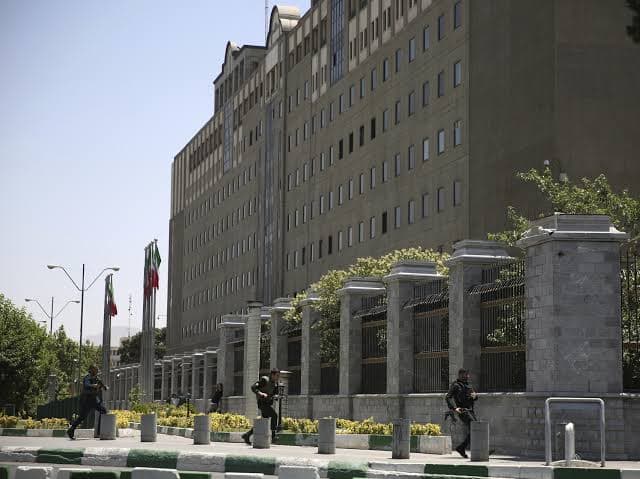
Iran's current position is defined by three prominent institutional voices, each presenting a different perspective on the country's relationship with international markets.
The Foreign Ministry continues promoting diplomatic engagement and economic stability.
Security institutions continue demonstrating military capability across strategically important maritime corridors.
Meanwhile, parliamentary leadership has publicly questioned the status of negotiations with the United States even as technical discussions continue through diplomatic channels.
Taken individually, each position appears understandable.
Viewed together, they create a policy landscape that international buyers must interpret carefully.
The Foreign Ministry Continues Supporting Economic Engagement
Foreign Minister Abbas Araghchi has consistently signalled support for maintaining commercial relationships where possible.
Recent diplomatic engagement has included confirmation that petrochemical export waivers remain in place under existing arrangements while discussions continue regarding broader regional stability.
The Foreign Ministry has also indicated that Iran intends to develop new mechanisms to improve the security of maritime traffic.
For international buyers, these statements suggest continued interest in preserving petrochemical exports as an important source of foreign exchange.
They also indicate recognition that commercial confidence depends heavily upon predictable shipping conditions.
The Security Environment Sends a Different Signal
Alongside diplomatic messaging, maritime security developments continued influencing international market sentiment during the latter stages of H1.
Commercial shipping remained exposed to operational uncertainty despite diplomatic initiatives and partial improvements in regional stability.
For logistics providers, insurers and commodity traders, these developments reinforced an important reality.
Political dialogue and operational security do not necessarily progress at the same pace.
This divergence continues affecting:
Marine insurance costs.
Freight planning.
Carrier routing decisions.
Buyer confidence.
Long-term procurement strategies.
The result is an environment where commercial opportunity and operational risk continue to coexist.
Parliamentary Messaging Adds Another Layer of Uncertainty
Further complexity emerged through statements from Parliament Speaker Mohammad Baqer Qalibaf, who publicly stated that Iran was not negotiating with the United States even as technical delegations continued discussions in Doha.
For external observers, these differing public positions appear contradictory.
From a procurement perspective, however, they illustrate that policy decisions affecting trade may emerge through multiple institutions rather than a single decision-making process.
This requires buyers to monitor developments across diplomatic, legislative and security channels simultaneously.
Why This Matters for Chemical Procurement
For many international companies, sanctions compliance has traditionally represented the primary consideration when evaluating Iranian-origin supply.
H2 2026 demonstrates that this approach is no longer sufficient on its own.
Chemical buyers must now evaluate three separate dimensions of risk:
Regulatory and sanctions compliance.
Physical logistics through the Strait of Hormuz.
Institutional policy developments affecting future commercial conditions.
Each factor influences procurement decisions independently, creating a more complex commercial environment than existed before the Hormuz crisis.
The 60-Day MoU Window Will Test Competing Priorities
The next phase of the market will be shaped by the interaction of these competing institutional positions rather than the dominance of any single viewpoint.
The current 60-day memorandum of understanding period creates space for diplomatic engagement while allowing other institutions to continue pursuing their own strategic objectives.
This means buyers should not expect a linear path toward either complete normalisation or renewed disruption.
Instead, H2 is likely to feature periods of commercial progress alongside intermittent geopolitical tension.
For procurement teams, planning should therefore be based on operational indicators rather than political expectations alone.
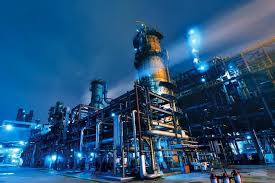
[IMAGE PLACEHOLDER 1]
Dimensions: 1200 × 800 px
AI Image Prompt:
"Photorealistic aerial view of an Iranian petrochemical export terminal with modern storage tanks, pipelines, a chemical tanker loading cargo and government buildings visible in the distance under soft morning light. Professional industrial photography, ultra realistic, sharp focus, no text, no labels, no logos."
Maritime Traffic and Political Risk Will Continue to Coexist
One of the defining characteristics of Iran's current position is that commercial shipping continues despite persistent geopolitical uncertainty.
Vessel movements through the Strait of Hormuz have resumed at reduced volumes, demonstrating that international trade has not stopped. At the same time, the capability for renewed disruption remains an important consideration for shipowners, insurers and logistics providers.
This combination creates a market where:
Commercial cargo continues moving through the Strait of Hormuz.
Marine insurance premiums remain elevated.
Shipping companies maintain enhanced operational risk assessments.
Procurement teams continue incorporating contingency planning into sourcing strategies.
Rather than viewing these developments as contradictory, buyers should recognise that commercial trade and geopolitical risk can exist simultaneously for extended periods.
Diplomatic Signals Should Be Evaluated Alongside Operational Data
One of the most important lessons from H1 2026 is that official statements alone rarely provide a complete picture of commercial risk.
Procurement decisions should instead combine political developments with measurable operational indicators.
Priority indicators include:
Petrochemical export activity from Iranian production facilities.
Commercial vessel movements through the Strait of Hormuz.
Marine insurance conditions and freight pricing.
Carrier routing decisions.
Diplomatic developments affecting sanctions or regional security.
Evaluating these indicators together provides a more balanced assessment than relying on political messaging from any single institution.
Procurement Strategy Requires Scenario Planning
Given the coexistence of competing policy positions, companies sourcing Iranian-origin chemicals should adopt flexible procurement strategies.
Recommended actions include:
Maintain full compliance with all applicable sanctions and trade regulations.
Confirm shipment schedules directly with suppliers and logistics providers.
Monitor maritime developments alongside diplomatic announcements.
Diversify sourcing for strategically important raw materials.
Build contingency plans into procurement and inventory strategies.
This approach allows buyers to respond effectively whether commercial conditions continue improving or geopolitical tensions temporarily increase.
Looking Ahead Through H2 2026
Iran enters the second half of 2026 with considerable industrial capability and continued importance within global petrochemical markets. However, its commercial outlook is increasingly shaped by the interaction of multiple state institutions rather than a single unified policy direction.
The Foreign Ministry continues supporting diplomatic engagement and economic normalisation, while security institutions maintain the capability to influence maritime operations and parliamentary leadership projects a more cautious political position. These competing approaches are likely to persist throughout the current diplomatic window rather than quickly converging into a single strategy.
For chemical buyers, the central lesson from H1 is that political complexity has become a permanent feature of procurement risk. Successful sourcing decisions will depend on balancing regulatory compliance, operational logistics and geopolitical awareness rather than relying on any single indicator of market stability.
Companies that combine close supplier engagement with continuous monitoring of shipping conditions, diplomatic developments and commercial operations will be best positioned to manage both opportunity and risk as H2 2026 unfolds.
Ready to source methanol from verified global suppliers? Explore competitive offers on our platform today.
Methanol CAS: 67-56-1