
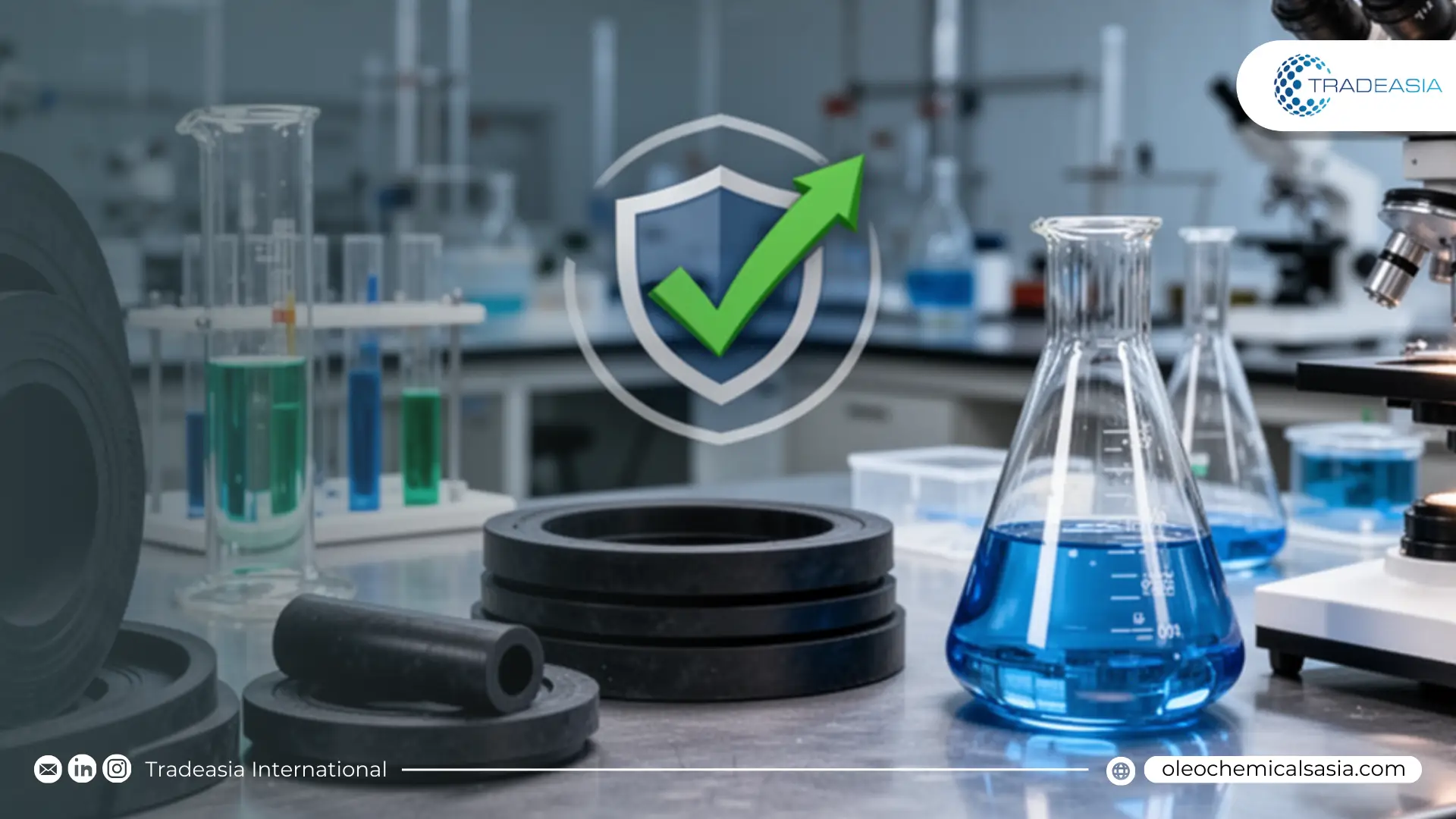
A rubber manufacturing company in Southeast Asia experienced inconsistent vulcanization performance during tire component production. The issue manifested as fluctuations in hardness, tensile strength, and curing time in finished rubber compounds.
Internal investigation by the production team revealed that the variation was linked to inconsistent quality parameters in the stearic acid used as a processing activator. The purchasing department had sourced the material primarily based on price competitiveness, without strict control over iodine value and fatty acid composition.
As a result, the manufacturer faced:
Higher batch rejection rates
Increased formulation adjustments by R&D teams
Production delays due to inconsistent curing behavior
The company needed a reliable solution that could stabilize production quality without significantly increasing raw material costs.
Ideation
Our technical analysis focused on evaluating the critical parameters influencing rubber vulcanization efficiency.
Key considerations included:
C18 fatty acid composition stability
Iodine value consistency
Moisture content
Batch-to-batch uniformity
Based on the operational requirements of rubber compounding, we recommended transitioning to a controlled-specification Stearic Acid 1842 grade, which offers a more stable fatty acid profile and consistent iodine value range suitable for rubber activation processes.
Additionally, we introduced a quality verification approach where each shipment included detailed Certificates of Analysis (COA) and batch traceability. This ensured that incoming materials met the technical parameters required for stable curing reactions.
This solution aligned procurement with production requirements while maintaining cost efficiency.
Outcome
After implementing the revised raw material specification, the manufacturer observed measurable improvements within several production cycles.
Key outcomes included:
Approximately 15% reduction in batch rejection rates
Improved consistency in vulcanization performance
Reduced need for formulation adjustments by R&D teams
Greater production predictability and operational efficiency
By aligning raw material specifications with processing requirements, the company achieved a more stable production environment while maintaining competitive manufacturing costs.